
COP31 in Antalya: What Türkiye’s Presidency Means for GCC Companies

COP31 takes place in Antalya, Türkiye, from 9 to 20 November 2026, with Türkiye holding the Presidency and Australia chairing the negotiations. It will not create binding rules for GCC companies. But the summit’s flagship electrification pledge, Türkiye’s new emissions trading system and the EU’s Carbon Border Adjustment Mechanism (CBAM) will change what Turkish and European buyers, lenders and partners ask GCC companies to prove. The pressure points are Scope 2 electricity data, product carbon footprints and supply-chain (Scope 3) data.
Key takeaways
- COP31 runs from 9 to 20 November 2026 at the Antalya EXPO Center. For the first time, leadership is split between two countries. Türkiye holds the Presidency and hosts the summit, while Australia runs the negotiations.
- The Presidency’s headline initiative is the 35-by-35 pledge. It aims to raise the share of final energy demand met by electricity from about 20% today to 35% by 2035.
- Türkiye’s Emissions Trading System (TR ETS) regulation entered into force on 27 August 2026. On 3 September, the Carbon Market Board set a 2026–2027 pilot covering electricity generation, cement, iron and steel, aluminium and fertilisers. 2026 is a reporting-only year, pricing starts in 2027, and first Monitoring Methodology Plans are due by 27 October 2026.
- Türkiye–GCC trade was $27.7 billion in 2024. Free trade agreements with the UAE and Qatar are already in effect, and talks with the wider GCC continue.
- The practical result for GCC companies is more data requests, especially for grid-electricity emissions, product footprints and supply-chain (Scope 3) data.
Why should a GCC executive care about a COP in Antalya?
COP31 matters to GCC companies because Türkiye is a direct business partner, not a neutral venue. In 2023, COP28 at Expo City Dubai was the centre of climate diplomacy. This November, the summit moves to a Mediterranean city most Gulf travellers know for beach resorts, and the business stakes are just as real.
Türkiye plays three roles for the Gulf. It is a manufacturing and contracting partner for GCC infrastructure. It is a destination for Gulf capital. And it is an economy in a customs union with the EU, whose exporters now face carbon border costs.
What gets pledged, financed and measured in Antalya will reach Gulf boardrooms through three channels:
- Turkish suppliers, contractors and co-investors.
- European buyers who sell into, or source from, both regions.
- Lenders who finance projects across both markets.
COP31 also continues earlier work rather than starting fresh. The COP31 Presidency has said it will build on earlier COP outcomes, including those from COP30 in Belém. That means the energy-transition language agreed at COP28 in Dubai remains the baseline. For how earlier summits shaped Gulf targets, read what COP outcomes mean for UAE and Saudi net zero plans.
Who is running COP31, and why does that matter?
Türkiye hosts and presides over COP31, and Australia chairs the formal negotiations. This split was agreed under a deal reached at COP30 in Belém.
- COP31 President: Murat Kurum, Türkiye’s Minister of Environment, Urbanisation and Climate Change.
- Negotiations lead: Chris Bowen, for Australia.
The split matters to business because the two halves produce different outputs:
- The negotiations produce formal decision text.
- The Presidency’s Action Agenda produces pledges, initiatives and coalitions. These are what companies are asked to sign up to and report against.
The Presidency is planning for scale. Minister Kurum has said that more than 80,000 visitors are expected in Antalya. The World Leaders Summit will take place in Antalya on 11 and 12 November.
What is the 35-by-35 pledge, and why is it a Scope 2 story?
The 35-by-35 Global Electrification Pledge aims to raise electricity’s share of global final energy consumption to 35% by 2035. It is the COP31 Presidency’s flagship initiative. The target was first announced at the Bonn climate talks on 9 June 2026. The pledge was then launched at UN headquarters in New York during Climate Week in September.
For the Gulf, electrification is concrete. It includes:
- Electric vehicle fleets.
- Electric cooling in place of on-site generation.
- Electric process heat.
- Electrified ports and logistics.
Each of these shifts moves emissions from Scope 1 into Scope 2:
- Scope 1 covers emissions from fuel a company burns itself.
- Scope 2 covers emissions from the electricity it buys.
The outcome then depends on the grid. If the electricity still comes largely from gas-fired plants, a company can electrify its operations and see little change in its total footprint.
Illustrative example (hypothetical figures). Assume a logistics group electrifies a fleet that emitted 1,000 tCO₂e a year from diesel. The new fleet uses 2,000 MWh of grid electricity a year.
- At a location-based grid factor of 0.40 tCO₂e/MWh, Scope 2 rises by 800 tCO₂e. The net cut is 200 tCO₂e, or 20%.
- At a grid factor of 0.50 tCO₂e/MWh, the net cut is zero.
- Under the market-based method, with evidenced renewable supply, Scope 2 could fall close to zero.
Same trucks, same kilometres, three different answers. This is why the methodology matters more than the pledge.
The GHG Protocol Scope 2 Guidance requires companies to report both location-based and market-based figures. Choosing and governing emission factors is its own discipline; we compare the options in emission factors in the GCC: DEFRA vs IEA vs local utility factors.
Critics have flagged the same gap at global level:
- Around a third of the world’s electricity still comes from coal, and the target does not specify how the extra power should be generated.
- According to Climate Home News, analysts at the think tank E3G warn that unless the COP31 cover decision specifies clean electrification, the pledge risks supporting fossil fuel projects.
For GCC companies, the takeaway is practical. Investors and customers will start asking what electricity you used. Grid-scale storage and renewable procurement in Saudi Arabia raise the same accounting question, as our analysis of Saudi Arabia’s 2GW battery storage deal and the Scope 2 accounting gap shows.
How does Türkiye’s climate rulebook affect GCC companies?
Gulf-owned and co-owned assets in Türkiye are directly inside Türkiye’s new compliance regime. Türkiye is hosting COP31 while overhauling its own climate rules.
The legal framework. The Climate Law passed in July 2025 did two things:
- It created the legal basis for a national emissions trading system modelled on the EU’s.
- It wrote Türkiye’s net zero and Nationally Determined Contribution (NDC) targets into law.
The national target. Under its second NDC, Türkiye aims to limit 2035 emissions to 643 Mt CO₂ equivalent, against a business-as-usual level of 1,109 Mt. This sits on the path to net zero by 2053. Independent analysts are critical. Climate Action Tracker rates Türkiye’s overall effort “Critically insufficient”, and that scrutiny will intensify during the presidency.
The carbon market timeline.
- 27 August 2026: The TR ETS regulation entered into force.
- 3 September 2026: The Carbon Market Board set the pilot design.
- 2026–2027: The pilot runs, covering larger installations in electricity generation, cement, iron and steel, aluminium and fertilisers.
- 27 October 2026: First Monitoring Methodology Plans are due.
- 2026: Reporting only.
- 2027: Pricing starts.
What this means for costs. Free allocation in the pilot is 100% of a benchmark, not 100% of actual emissions. Plants that emit more than the benchmark will be short of allowances once pricing starts. For any Gulf investor with a stake in a Turkish cement plant, steel mill or power asset, 2026 data quality therefore shapes 2027 costs. Our guide to Türkiye’s carbon market pilot gives the full breakdown.
The EU link. Turkish exporters sell heavily into the EU, and CBAM now requires verified, installation-level emissions data under Regulation (EU) 2023/956. When a Turkish manufacturer sources aluminium, steel or fertiliser inputs from the Gulf, that CBAM pressure flows back to the Gulf supplier. We set out the costs in CBAM in 2026: what GCC steel and aluminium exporters actually owe.
Where do Gulf and Turkish value chains meet?
Trade is the main channel through which COP31 reaches GCC companies.
- Trade volume: Türkiye–GCC trade was $27.7 billion in 2024. That was Turkish exports of $14.7 billion and imports of $13 billion.
- Trade target: After President Erdoğan’s visit to Kuwait, Qatar and Oman, Türkiye set a $15 billion trade target with those three countries.
- Existing agreements: Free trade agreements with the UAE and Qatar are already in effect.
- Wider agreement: Negotiations on a Türkiye–GCC free trade agreement cover goods, services, investment and digital trade. Türkiye and the GCC have a combined global trade volume of about $2.4 trillion, so the agreement is expected to create one of the world’s largest free trade areas.
That integration creates three emissions touchpoints:
- GCC buyers of Turkish goods. Turkish construction materials, machinery and contracting services feed GCC giga-projects. Under TR ETS and CBAM pressure, Turkish suppliers will increasingly have product carbon footprints to share. GCC buyers who request that data improve their Scope 3 Category 1 (purchased goods and services) figures. Managing those footprints at scale is covered in product carbon footprints without version-control hell.
- GCC suppliers to Turkish industry. Gulf aluminium, petrochemicals and fertilisers used in Turkish factories will face questions about embedded emissions, because the finished Turkish product may be heading to the EU.
- Gulf capital in Turkish assets. Sovereign funds, banks and family offices with Turkish holdings will see ETS exposure in portfolio companies. They will need to reflect it in financed emissions and climate risk disclosures. Read our financed emissions playbook for the GCC and our analysis of IFRS S1 and S2 in the Gulf.
Which Action Agenda themes land in GCC portfolios?
Beyond electrification, the Presidency’s Action Agenda overlaps closely with GCC operational priorities. Alongside the electrification target, the Presidency has set two more global goals for 2035:
- Halve the growth in global waste.
- Cut energy consumption intensity in buildings by at least 25%.
Buildings. A 25% cut in building energy intensity is a direct challenge to GCC real estate, where cooling dominates energy demand. Most portfolios fall short in the gap between design-stage promises and operational performance, as we explain in why real estate net-zero plans fail after handover.
Waste and methane. Türkiye has made zero waste a signature theme. Gulf cities scaling waste-to-energy and landfill diversion will see their own targets measured against this benchmark.
AI and data centres. The Presidency has also launched the Antalya Pledge on Artificial Intelligence. It covers how AI is designed, procured, powered, deployed, measured and managed in support of climate goals. The UAE and Saudi Arabia are competing to become AI compute hubs, so the word “powered” deserves attention. Data centre electricity is on track to become a reportable, comparable metric.
What will Antalya decide, and what won’t it?
Antalya is likely to produce a short political cover decision and a set of voluntary pledges, not major new negotiated rules. At the pre-COP meeting in Fiji (5–8 October 2026), Australia and Türkiye agreed to pursue a presidency-led cover decision. It will set a focused political direction rather than a lengthy negotiated text.
Two live issues are worth watching from the Gulf:
- Climate finance. Kurum has positioned Türkiye as a bridge between developed and developing countries. He has called closing the climate finance gap a key priority. This affects how Article 6 carbon credits, blended finance and Gulf-funded climate investments are framed. For the Saudi angle, see inside Saudi Arabia’s carbon market: a 2026 offset strategy.
- Fossil fuels. COP30 did not agree a process for transitioning away from coal, oil and gas, and frustration over that failure could resurface in Antalya. This is the most sensitive item for hydrocarbon economies.
What should GCC and Turkish companies do before 9 November?
The companies that benefit from COP31 will be the ones whose data holds up when the questions arrive, not the ones issuing press releases in Antalya. Six steps, in order of urgency:
- Meet the TR ETS deadline. If you own or co-own an installation in a pilot sector, confirm its first Monitoring Methodology Plan is filed by 27 October 2026.
- Report Scope 2 both ways. Publish location-based and market-based figures, document your emission factors, and be ready to show what electrification does to your actual footprint.
- Map your Türkiye exposure. List Turkish subsidiaries, joint ventures, suppliers and customers in TR ETS pilot sectors and CBAM-covered goods.
- Prepare product-level data. If you sell steel, aluminium, fertiliser, cement or petrochemicals into Türkiye, expect footprint requests from buyers serving the EU.
- Tighten your inventory for local rules. COP31 headlines do not replace domestic deadlines. Start with building a UAE Climate Law GHG inventory that survives a verifier, and check the regulatory requirements across Coral’s markets.
- Define the metric before you pledge. If your organisation plans to back the 35-by-35 pledge or the Antalya AI Pledge as a supporter, set the metric and baseline before you sign.
FAQ
When and where is COP31?
COP31 takes place at the Antalya EXPO Center in Antalya, Türkiye, from 9 to 20 November 2026. The World Leaders Summit is on 11 and 12 November.
Is the COP31 leaders’ summit in Antalya or Istanbul?
Antalya. Türkiye initially said the leaders’ summit would be held in Istanbul, but in April 2026 the Presidency confirmed it for Antalya on 11 and 12 November.
Who is the COP31 President?
Murat Kurum, Türkiye’s Minister of Environment, Urbanisation and Climate Change. Australia’s Chris Bowen leads the formal negotiations.
What is the 35-by-35 pledge?
It is a voluntary pledge to raise electricity’s share of global final energy consumption to 35% by 2035, from about 20% today. Governments sign it, and businesses, investors and cities can join as supporters.
Does COP31 create new legal obligations for GCC companies?
Not directly. Legal obligations come from national and regional rules, such as the UAE Climate Law, ISSB-based disclosure rules in the Gulf, the TR ETS and the EU’s CBAM. COP31 shapes the expectations of the buyers, lenders and governments that apply those rules.
When is the TR ETS Monitoring Methodology Plan due?
Installations in the pilot must submit their first Monitoring Methodology Plan electronically by 27 October 2026, unless the deadline is extended. The plan sets out how the installation will monitor and report its emissions and activity data.
How does the TR ETS affect Gulf investors?
Gulf-owned or co-owned installations in the five pilot sectors must report 2026 emissions, and pricing begins in 2027. Free allocation is based on a benchmark, so plants that emit above the benchmark will face costs. Those costs will show up in portfolio returns and financed emissions.
Turn COP31 headlines into numbers your board can defend
Antalya will produce pledges. Your stakeholders will ask for proof.
- Coral’s Emissions Management System brings Scope 1, 2 and 3 data, emission factors and evidence into one auditable record.
- Coral’s ESG Reporting maps the same data to the frameworks that Gulf and Turkish regulators use.
- The platform is available in English, Arabic, Turkish and Urdu, so teams in Dubai, Riyadh and Istanbul work from the same numbers.
Book a demo to see how Coral prepares your inventory for whatever Antalya decides.
İlgili makaleler
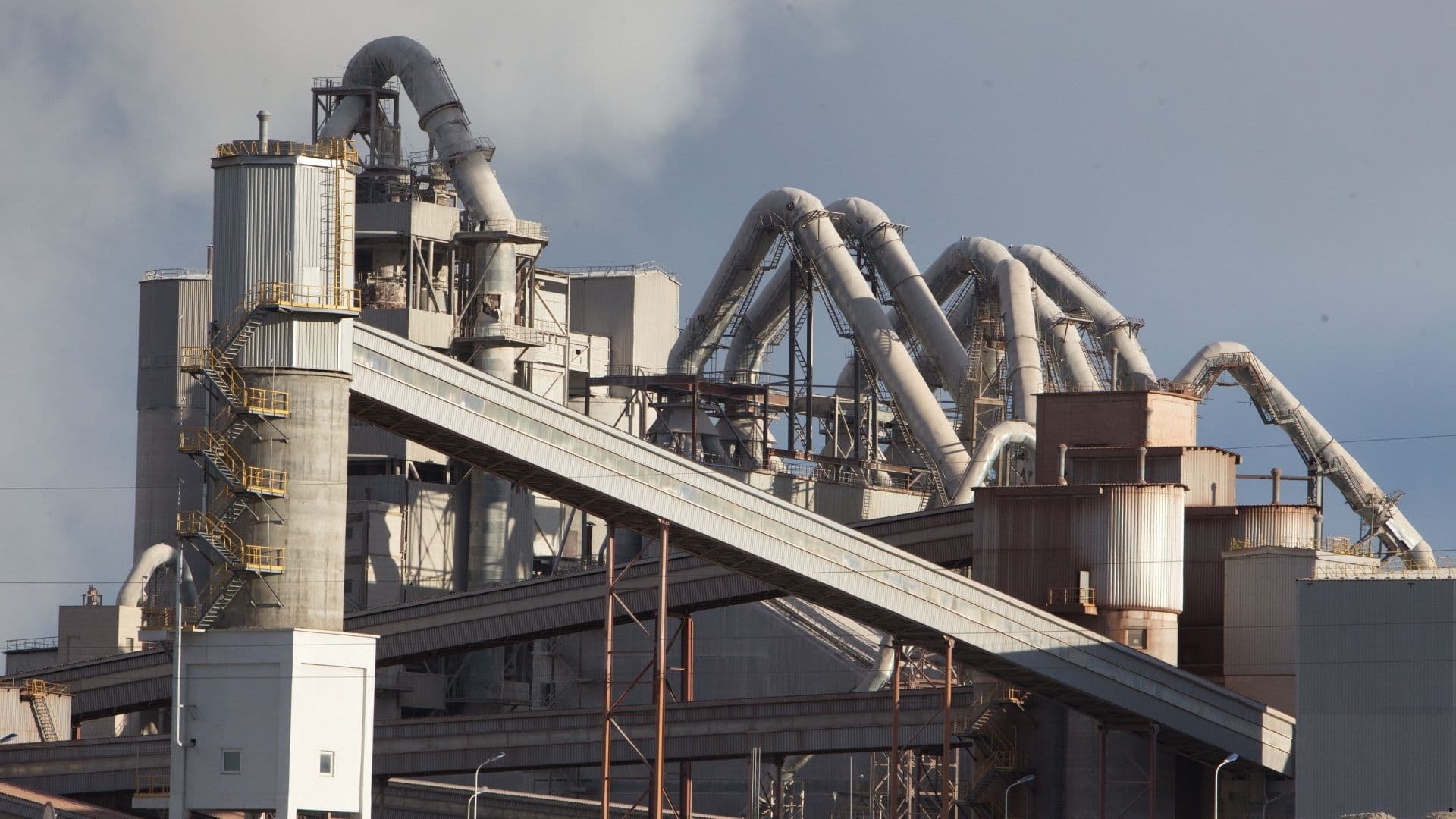 Carbon Markets & Climate Policy25 Eylül 2026
Türkiye’s Carbon Market Pilot: 2026 Data Sets Your 2027 Carbon Bill
Türkiye’s Emissions Trading System (TR ETS) regulation entered into force on 27 August 2026. The Carbon Market Board’s first decision (KPK/2026/1) then set a 2026–2027 pilot for Category B and C installations in five sectors: electricity generation, cement, iron and steel, aluminium and fertilisers. 2026 is a reporting-only year, and carbon pricing starts in 2027. […]
 Emissions Reporting16 Eylül 2026
ESRS E3 Water Disclosure in the GCC: What Boards Need to Know
ESRS E3 is the European standard covering water and marine resources. It requires companies to report water withdrawal, discharge, consumption, recycled and reused volumes and water intensity, with separate disclosure for sites located in areas of high water stress. For companies operating in the GCC, nearly every site meets that definition, which changes the shape […]
 Emissions Reporting10 Eylül 2026
Dual-Fuel Ships Won’t Cut Your Scope 1 and 3 Automatically
A methanol dual-fuel ship does not lower anyone’s emissions number by itself. What counts is the fuel actually burned and its full lifecycle intensity, measured well-to-wake from production through combustion. Grey methanol, made from natural gas, delivers little to no reduction; only green or bio-methanol, backed by evidence, changes what a Gulf logistics group, port […]