
Dual-Fuel Ships Won’t Cut Your Scope 1 and 3 Automatically
A methanol dual-fuel ship does not lower anyone’s emissions number by itself. What counts is the fuel actually burned and its full lifecycle intensity, measured well-to-wake from production through combustion. Grey methanol, made from natural gas, delivers little to no reduction; only green or bio-methanol, backed by evidence, changes what a Gulf logistics group, port operator or shipper can report under Scope 1 or Scope 3.
Key takeaways:
- The Gulf is fast becoming a serious alternative-fuel shipping hub: methanol-capable vessels, expanding terminals, and Fujairah already ranking among the world’s top three bunkering ports.
- A dual-fuel ship is not a green ship. The engine’s capability doesn’t move your emissions number; the fuel actually burned does.
- Grey methanol delivers little to no well-to-wake reduction. Only green or bio-methanol, backed by evidence, changes the figure you can report.
- Where the cut lands depends on scope and boundary. Owned vessels sit in Scope 1, chartered and purchased transport sit in Scope 3, and a claim that can’t be evidenced won’t survive assurance.
- Regulation is arriving from two directions at once: the International Maritime Organization’s (IMO) global fuel standard, up for adoption in October 2026, and EU carbon rules that already apply to any ship calling a European port.
The Gulf’s shipping decarbonisation moment is real
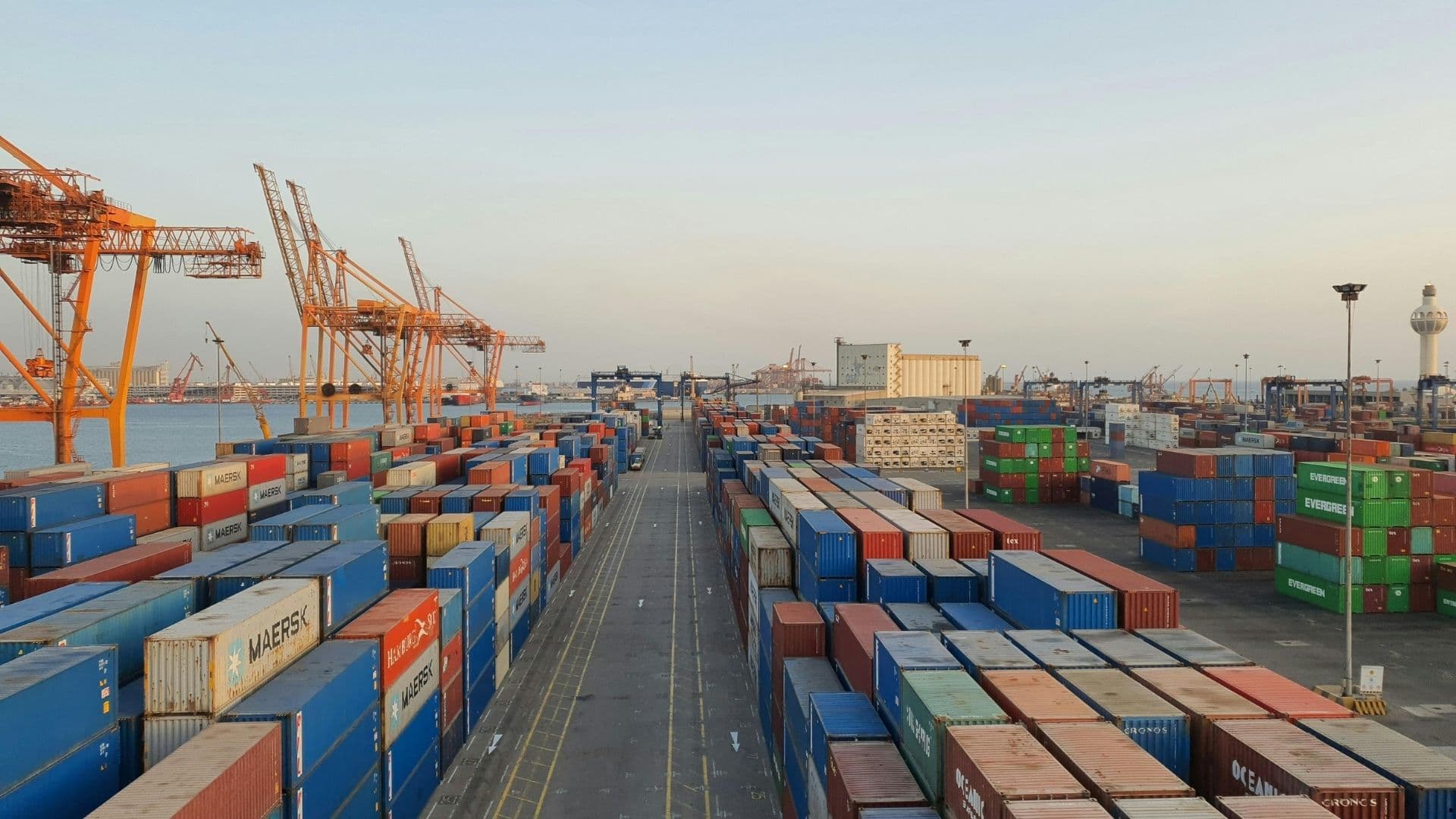
In the space of a single week this summer, the Gulf’s shipping story picked up two big headlines. DP World named its first methanol dual-fuel container vessel, the DP World London, and Saudi Arabia’s Red Sea Gateway Terminal (RSGT) signed a $434 million deal with CMA CGM to build a fourth container terminal at Jeddah Islamic Port. Both point the same way: a region that sits on one of the busiest shipping corridors between Asia and Europe is investing hard in cleaner, bigger, more modern maritime infrastructure.
The DP World London, a 1,250 twenty-foot equivalent unit (TEU) methanol dual-fuel vessel, was delivered in April 2026 and now runs a North Europe service. In Saudi Arabia, RSGT, CMA CGM and the Saudi Ports Authority (Mawani) signed definitive agreements in August to develop Jeddah Islamic Port’s Terminal 4, adding up to 2.6 million TEU of capacity and berths built for the largest container vessels afloat.
Underneath the vessels and cranes sits fuel. The UAE’s Port of Fujairah is one of the world’s top three bunkering hubs, positioned just outside the Strait of Hormuz on the route almost every Asia-to-Europe vessel travels, and it is already trialling biofuel while positioning for methanol and ammonia. The Gulf is not only a customer for cleaner marine fuel; with NEOM’s green hydrogen and ammonia project in Saudi Arabia and green ammonia plans in Oman, the region intends to produce it. That combination, a major trade gateway plus low-carbon fuel supply, is why Gulf ports are moving now.
Why a “green ship” is not a lower number
Here is the trap: “methanol dual-fuel” describes what an engine can burn. The DP World London took its first bunkering on grey methanol, a fossil fuel. On a well-to-wake basis, meaning its full lifecycle intensity from production through combustion, that is close to a lateral move. The vessel is ready for a cleaner future; the accounting is not there yet.
Methanol comes in grades that could hardly be more different for carbon accounting:
- Grey methanol, made from natural gas or coal, offers little to no well-to-wake benefit.
- Blue methanol adds carbon capture to that process, a partial improvement.
- Green e-methanol and bio-methanol, made from renewable power or biogenic feedstock, are where real reductions live.
The number an operator can report is driven by the fuel that physically went into the tank and its lifecycle emissions factor. A ship running on grey methanol has modernised without decarbonising. This is the same pattern Coral flagged when Saudi Arabia’s grid added battery storage: the announcement is real, but the reported reduction only shows up if the accounting boundary and the evidence line up. (See Saudi Arabia’s battery storage and the Scope 2 accounting gap.)
Where the emissions actually sit: Scope 1 versus Scope 3
For a logistics group, a fuel switch only helps in the scope where the fuel is burned, and only if the group owns the claim.
- If a company owns or operates the vessel, its fuel combustion is that company’s Scope 1. Switching to a genuinely lower-intensity fuel cuts Scope 1 directly.
- If a company charters space or hires a carrier, those emissions are Scope 3, booked as upstream or downstream transportation depending on who pays for the freight. The reduction then depends entirely on the supplier’s fuel choice and on getting primary data out of them.
- For a port or terminal operator, most vessel emissions at the berth are someone else’s Scope 1 and the operator’s Scope 3, sitting alongside its own Scope 1 from equipment and Scope 2 from grid power.
The hard part is almost always Scope 3, because it depends on data a company does not directly control. That is the same wall GCC construction firms hit with upstream materials, and it clears the same way: supplier-level primary data and an evidence trail rather than industry averages. (See why Scope 3 Category 1 feels impossible for GCC builders.)
The practical takeaway: before claiming a reduction from a dual-fuel vessel, know which scope it lands in, whether the claim can be made at all, and whether the fuel’s lifecycle intensity can be proven.
The regulation is closing in from two directions
None of this stays voluntary for long.
The International Maritime Organization’s (IMO) Net-Zero Framework sets a global marine fuel standard and a greenhouse gas pricing mechanism for ships above 5,000 gross tonnage, which produce around 85 percent of shipping emissions. It is built on a well-to-wake intensity metric, which is exactly why fuel grade decides everything. Member states postponed the adoption vote by a year, and it is due back on the table in October 2026, with Saudi Arabia among the states that pushed for the delay. Whatever the outcome, the direction of travel is a priced, lifecycle-based standard.
The EU is not waiting. Its Emissions Trading System (EU ETS) now covers shipping, and FuelEU Maritime sets declining limits on the greenhouse gas intensity of the energy ships use when calling at EU ports. Any Gulf operator on a European trade lane, which is most of the large ones, is already inside a European carbon rulebook. This is the same extraterritorial reach Coral mapped for Gulf steel and aluminium exporters under the Carbon Border Adjustment Mechanism (CBAM). (See what CBAM means for GCC steel and aluminium exporters in 2026.)
Both regimes reward the same thing: verified, lifecycle fuel data. Neither accepts “we ran a methanol ship” without the numbers behind it.
What Gulf ports and logistics groups should do now
Four moves separate a credible claim from one that unravels under assurance.
Track fuel at the transaction level. Capture each bunker delivery with its fuel grade, origin and well-to-wake intensity, supported by bunker delivery notes and certificates, rather than a blanket assumption that methanol means clean.
Map every reduction to the right scope and boundary before reporting it. A cut booked in the wrong scope, or claimed without the right to it, is a finding waiting to happen.
Build one dataset that serves every ask. IMO carbon intensity rules, EU ETS and FuelEU, customer questionnaires, and disclosure under the Global Reporting Initiative (GRI) or the International Sustainability Standards Board (ISSB) all draw on the same underlying fuel and activity data. Collect it once, report it many ways.
Keep every claim defensible. Grey, blue, bio and e-fuels are worlds apart in what can be said about them. Match the claim to the evidence so it holds when a verifier, a customer or a regulator asks.
FAQ
Does a methanol dual-fuel ship automatically reduce emissions?
No. A dual-fuel ship can run on multiple fuel types, but its emissions depend entirely on which fuel is actually loaded. A vessel bunkered on grey methanol delivers close to no well-to-wake reduction compared with conventional fuel.
What’s the difference between grey, blue and green methanol?
Grey methanol is made from natural gas or coal and offers little emissions benefit. Blue methanol adds carbon capture to that process for a partial improvement. Green e-methanol and bio-methanol, made from renewable power or biogenic feedstock, deliver the real lifecycle reductions.
Is a vessel’s fuel use Scope 1 or Scope 3?
It depends on ownership. Fuel burned by a vessel a company owns or operates is that company’s Scope 1. Fuel burned by a chartered vessel or a carrier a company pays for freight is Scope 3, typically upstream or downstream transportation.
When does the IMO Net-Zero Framework take effect?
The framework’s adoption vote, covering a global marine fuel standard and greenhouse gas pricing mechanism, was postponed by a year and is due back before IMO member states in October 2026.
Does EU carbon regulation apply to Gulf shipping companies?
Yes, if they call at EU ports. The EU Emissions Trading System covers shipping, and FuelEU Maritime sets declining greenhouse gas intensity limits on the energy ships use in EU ports, regardless of where the operator is based.
What evidence is needed to claim a fuel-switching emissions reduction?
Bunker delivery notes and certificates showing fuel grade, origin and well-to-wake intensity, mapped to the correct scope and ownership boundary. Claims without this evidence trail are unlikely to survive third-party assurance.
Turn fuel-switching into a number you can defend
Coral gives Gulf ports, terminals and logistics groups one governed place to do exactly this. Coral’s Emissions Management System centralises fleet, terminal and fuel data and measures Scope 1 to 3 against the GHG Protocol and ISO 14064-1, and Coral’s ESG Reporting turns that same dataset into disclosures aligned with frameworks from GRI to CSRD and ISSB. When the IMO vote lands or an EU deadline arrives, the inputs adjust, not the whole operation.
- See how Coral measures emissions across Scope 1, 2 and 3.
- Track the rules that apply to your trade lanes on our regulations hub.
- Wondering whether your dual-fuel plans will actually move your reported emissions? Book a demo and we will map your fleet and terminals to the numbers you can defend.
Related Articles
 Emissions ReportingOctober 15, 2026
AI Data Centres in the GCC: How to Measure Power, Water and Embodied Carbon
Every AI rack in the GCC carries four emissions sources: purchased electricity (Scope 2), backup generators and refrigerants (Scope 1), cooling water that is often desalinated, and embodied carbon in buildings and hardware (Scope 3). In our view, most operators can report electricity well, but few can report all four with evidence. As the UAE […]
 Carbon Markets & Climate PolicyOctober 8, 2026
COP31 in Antalya: What Türkiye’s Presidency Means for GCC Companies
COP31 takes place in Antalya, Türkiye, from 9 to 20 November 2026, with Türkiye holding the Presidency and Australia chairing the negotiations. It will not create binding rules for GCC companies. But the summit’s flagship electrification pledge, Türkiye’s new emissions trading system and the EU’s Carbon Border Adjustment Mechanism (CBAM) will change what Turkish and […]
 Carbon Markets & Climate PolicySeptember 25, 2026
Türkiye’s Carbon Market Pilot: 2026 Data Sets Your 2027 Carbon Bill
Türkiye’s Emissions Trading System (TR ETS) regulation entered into force on 27 August 2026. The Carbon Market Board’s first decision (KPK/2026/1) then set a 2026–2027 pilot for Category B and C installations in five sectors: electricity generation, cement, iron and steel, aluminium and fertilisers. 2026 is a reporting-only year, and carbon pricing starts in 2027. […]