
Coral welcomes Mohammed AlNakhi to its Board of Advisors
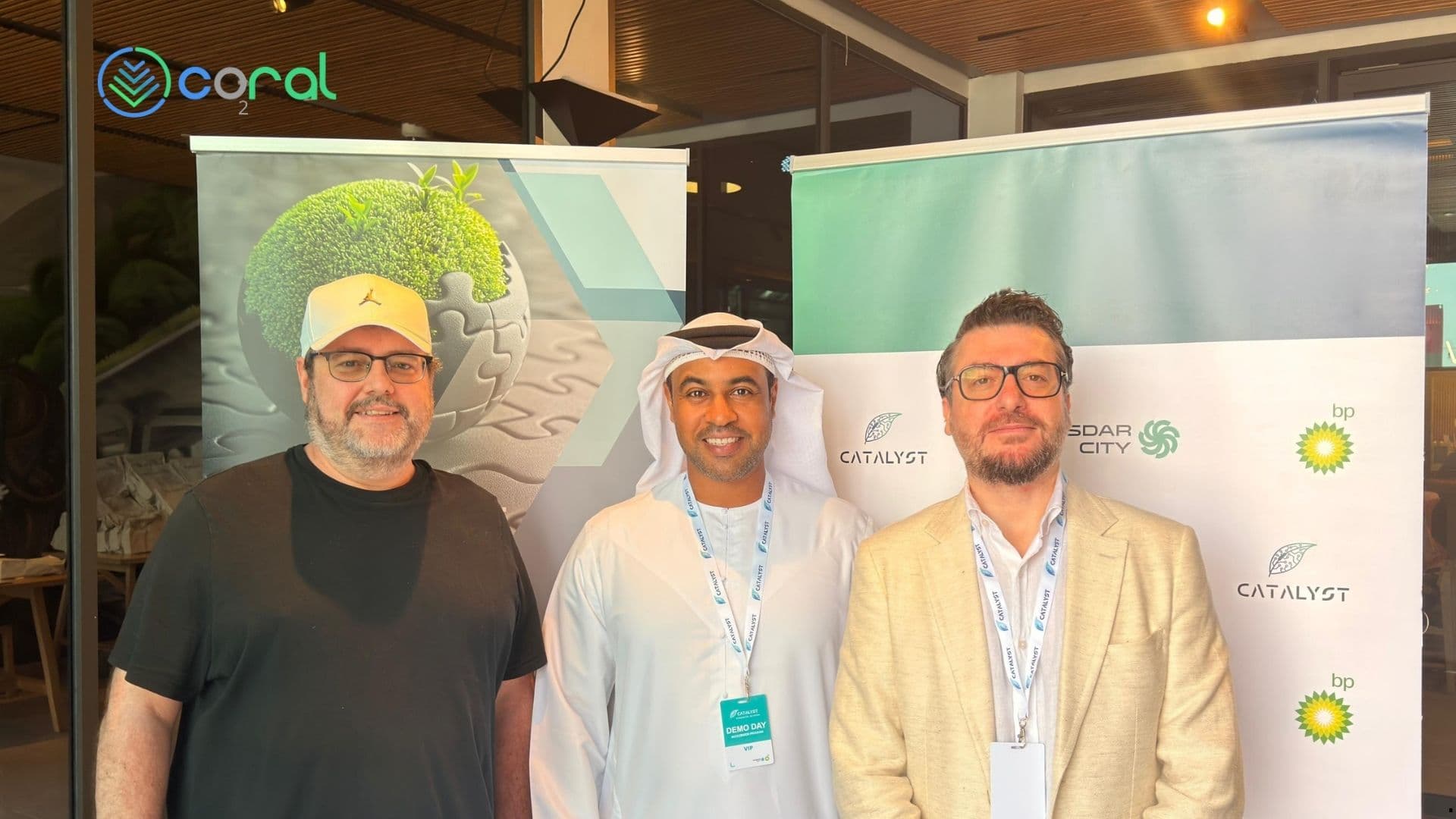
We’re glad to share that Mohammed AlNakhi has joined Coral’s Board of Advisors as Strategic Advisor, Energy & Net Zero.
Mohammed knows the energy transition from the inside. With over two decades at bp, from hydrogen business development to his current role leading JV strategy and risk, and through Catalyst he’s spent years backing and mentoring cleantech startups across the region. He understands the GCC market, the gap between reporting on sustainability and actually doing something about it. That’s the gap Coral was built to close.
As an advisor, Mohammed will work closely with our team on strategy, market positioning, and how we show up across the region. We’re not bringing him in for a title on a slide. We want his honest read on where we’re strong, where we’re not, and what it really takes to earn the trust of the companies we serve.
Why this matters to us
Having Mohammed in our corner makes us better at the thing we care about most: helping companies turn messy emissions data into decisions they can act on. He’s seen sustainability play out at scale, so he’ll push us to focus on what genuinely moves the needle rather than what looks good in a report. His roots in the regional energy and cleantech world keep us close to the market we serve. And his instinct for what earns credibility with enterprise buyers will sharpen how we go to market.
Our goal hasn’t changed. We want to be the platform GCC companies trust to measure their emissions and act on them with confidence. People like Mohammed are how we get there faster.
A note from Mohammed AlNakhi
“What attracted me to Coral is its focus on turning emissions data into practical business decisions. Many companies today are making progress in measuring and reporting emissions, but the real challenge is converting that information into action that supports operational, commercial, and sustainability objectives. Coral’s AI-native approach, combined with a strong understanding of the GCC market, positions the company to help bridge that gap. I am excited to support the team as they scale and help organizations across the region build confidence in their emissions management journey.” says Mohammed AlNakhi, Advisor at Coral.
A note from our founder
“Coral exists to close the gap between companies reporting on their emissions and actually acting on them. Mohammed has lived on both sides of that gap, from over two decades at bp working on hydrogen and net zero to mentoring climate tech founders across the region. He’ll keep us honest about what genuinely helps our clients versus what just looks good on paper. That’s exactly the kind of advisor we wanted. And a real thank you to the Catalyst team, whose partnership made this introduction possible.” says Daniele Sileri, CEO and founder of Coral.
Welcome, Mohammed!
İlgili makaleler
 Emissions Reporting16 Eylül 2026
ESRS E3 Water Disclosure in the GCC: What Boards Need to Know
ESRS E3 is the European standard covering water and marine resources. It requires companies to report water withdrawal, discharge, consumption, recycled and reused volumes and water intensity, with separate disclosure for sites located in areas of high water stress. For companies operating in the GCC, nearly every site meets that definition, which changes the shape […]
 Emissions Reporting10 Eylül 2026
Dual-Fuel Ships Won’t Cut Your Scope 1 and 3 Automatically
A methanol dual-fuel ship does not lower anyone’s emissions number by itself. What counts is the fuel actually burned and its full lifecycle intensity, measured well-to-wake from production through combustion. Grey methanol, made from natural gas, delivers little to no reduction; only green or bio-methanol, backed by evidence, changes what a Gulf logistics group, port […]
 Emissions Reporting3 Eylül 2026
Saudi Arabia’s 2GW Battery Storage Deal and the Scope 2 Accounting Gap
On 20 August 2026, the Saudi Power Procurement Company (SPPC), Saudi Arabia’s principal buyer of electricity, signed four agreements for 2GW of battery energy storage worth SAR 4.35 billion. It was the Kingdom’s first award of build-own-operate contracts for grid-scale storage. Every headline framed it as a milestone for renewable integration. Almost none mentioned the […]