
AI Data Centres in the GCC: How to Measure Power, Water and Embodied Carbon
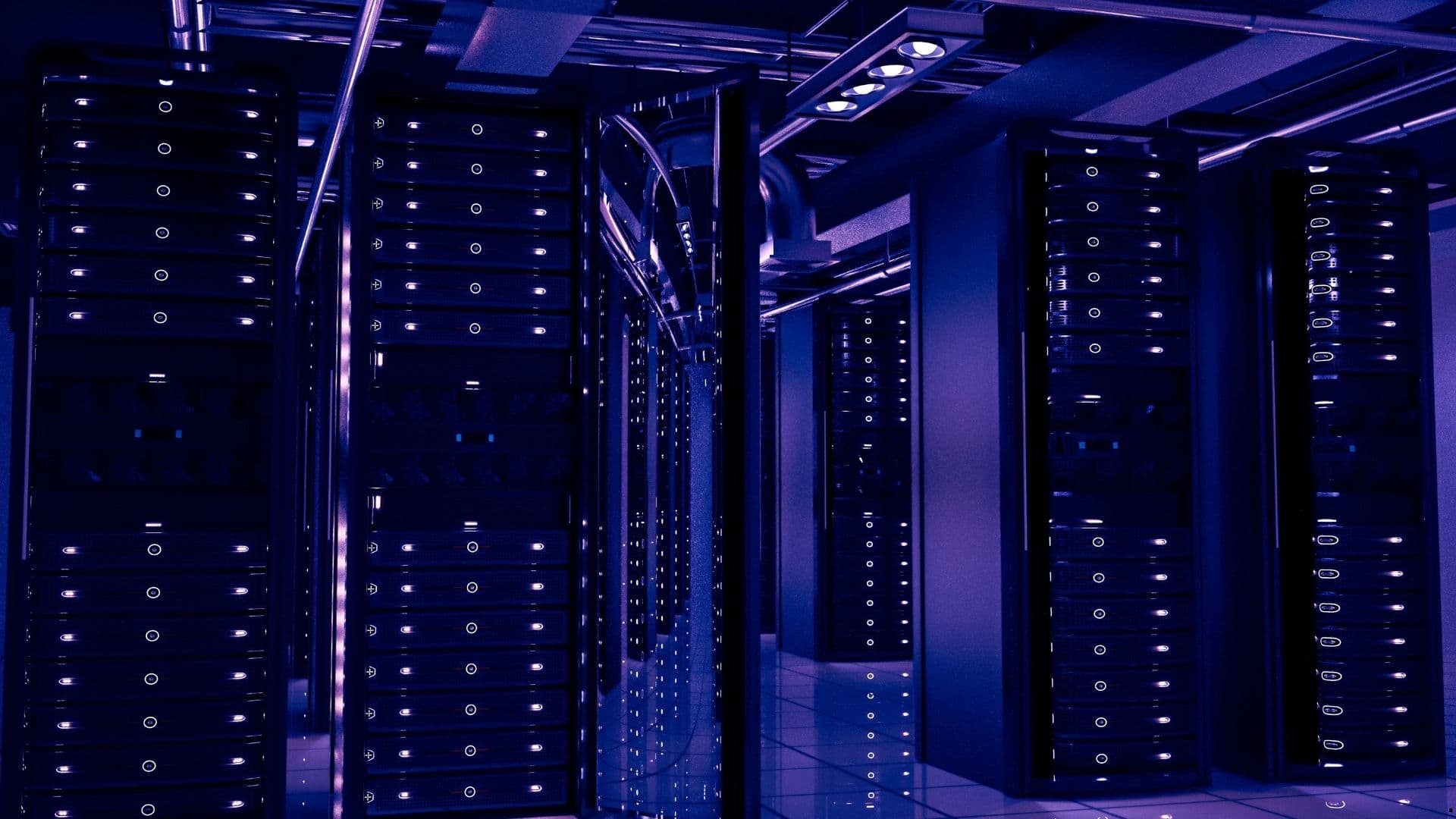
Every AI rack in the GCC carries four emissions sources: purchased electricity (Scope 2), backup generators and refrigerants (Scope 1), cooling water that is often desalinated, and embodied carbon in buildings and hardware (Scope 3). In our view, most operators can report electricity well, but few can report all four with evidence. As the UAE and Saudi Arabia add gigawatts of AI capacity, tenants, lenders and regulators are starting to ask per-megawatt questions that an electricity-only inventory cannot answer.
Key takeaways
- The GCC is building AI capacity at a pace that will make data centres some of the region’s most closely scrutinised emitters.
- Power Usage Effectiveness (PUE) alone can mislead in a desert climate. Energy and water trade off against each other, so both need to be disclosed together.
- Embodied carbon is a large share of a data centre’s lifetime emissions, and it is locked in before the first server powers on.
- Khazna Data Centres’ first ESG report, published on 6 October 2026, shows regional operators moving from ambition to auditable baselines.
- Tenants, including banks, government entities and enterprises using sovereign AI clouds, inherit a share of these emissions in their own Scope 3.
Why the GCC data centre build-out is now an emissions story
The scale of what the Gulf is building has changed the conversation. Stargate UAE, built by G42 and operated by OpenAI and Oracle, is a 1GW cluster in Abu Dhabi. Its first 200MW phase is expected to go live in 2026, according to Capacity Global.
Saudi Arabia is moving just as fast. HUMAIN has secured 211 plots of land across the Kingdom and is building facilities in Riyadh and Dammam with an initial 100MW each. This is part of a plan to reach roughly 6GW over the next decade, according to Data Center Dynamics.
In August 2026, HUMAIN awarded Al Moammar Information Systems contracts for 200MW of new capacity, on top of an ongoing 50MW project, according to AGBI. The same report cites an Alvarez & Marsal estimate that Saudi Arabia’s AI and cloud expansion could need up to $42 billion in project capital by 2030.
The electricity behind this is substantial. The International Energy Agency (IEA) notes that a typical AI-focused data centre uses as much electricity as 100,000 households (IEA, Energy and AI, 2025). In its April 2026 update, the IEA reported that global data centre electricity demand rose 17% in 2025, against 3% growth in overall demand. It expects data centre consumption to double by 2030 (IEA, 2026). For the Middle East, the IEA projected in 2025 that installed data centre capacity would nearly triple to around 3.3GW within five years, as cited by Gulf Business.
That growth coincides with tighter disclosure rules. Federal Decree-Law No. 11 of 2024 on the Reduction of Climate Change Effects (the UAE Climate Law) requires emitting entities to measure and report greenhouse gas (GHG) emissions through the national monitoring, reporting and verification system run by the Ministry of Climate Change and Environment (MOCCAE). The decree itself does not list which scopes must be reported, so detail is following in implementing guidance (Ropes & Gray).
Either way, a data centre campus is one of the largest single electricity consumers in its emirate, and its inventory will be read accordingly. For the inventory basics, see our guide to building a UAE GHG inventory that survives a verifier.
Khazna’s 2025 ESG report: what an operator baseline looks like
On 6 October 2026, Khazna Data Centres, the UAE’s largest wholesale operator, published its first standalone ESG report, covering calendar year 2025. The report was prepared with reference to the GRI Standards, with emissions calculated under the GHG Protocol Corporate Standard, according to WAM.
Khazna reported 27% carbon-free electricity coverage for its mechanical cooling load in 2025, with an ambition to reach 100% by 2035 (TradeArabia). The target covers the cooling load, not the IT load. In our view, that is a sensible and honest starting point, because it isolates the consumption the operator controls most directly.
It also shows why definitions matter. Two operators can both claim “carbon-free progress” while measuring entirely different things.
Khazna described the report as a baseline to be updated annually as it strengthens governance, data quality and future assurance readiness. Assurance readiness is the phrase to watch. Once operator figures are assured, every tenant relying on them will expect the same standard of evidence behind its own allocated share.
Power: why PUE is necessary but not sufficient
Power Usage Effectiveness (PUE) is total facility energy divided by IT equipment energy, as defined in ISO/IEC 30134-2. A PUE of 1.3 means 0.3 kWh of cooling and overhead for every 1 kWh of computing. It measures efficiency, not emissions.
The GCC gives operators real levers on the electricity itself. In Abu Dhabi, Clean Energy Certificates (CECs), sold by the Emirates Water and Electricity Company (EWEC) under a Department of Energy framework, let organisations reduce reported Scope 2 emissions.
Three issues make data centre Scope 2 harder than it looks.
Location-based and market-based figures can diverge sharply. A campus buying certificates or signing a clean power agreement will report a low market-based figure. Its location-based figure still reflects the grid it physically draws from. The GHG Protocol Scope 2 Guidance requires both, and tenants will increasingly ask which one their allocation uses.
Emission factor choice moves the total. A worked example shows the effect:
- A 100MW campus running at full load for a year consumes about 876,000 MWh (100MW × 8,760 hours).
- At an illustrative grid factor of 0.40 tCO₂e/MWh, location-based Scope 2 is 350,400 tCO₂e.
- At 0.45 tCO₂e/MWh, it is 394,200 tCO₂e.
The factor choice alone moves the total by 43,800 tCO₂e, with no change in operations. That is why factor source, year and geography need to be documented and locked per reporting year. For more on this, see our guide to emission factors in the GCC and how to govern them.
Matching clean supply to round-the-clock load is not automatic. AI workloads run continuously, but solar does not. Storage and grid flexibility determine whether a clean energy claim reflects hourly reality or only an annual accounting match.
Data centres also have a Scope 1 footprint that rarely makes headlines. In 2025, diesel generators accounted for 81% of the global data centre backup power market, according to OPIS. Generator testing, emergency runs and refrigerant leaks from cooling systems all belong in Scope 1, and all are often under-recorded.
Water: the metric that exposes a flattering PUE
Water Usage Effectiveness (WUE) is litres of water used per kWh of IT energy, as defined in ISO/IEC 30134-9. In most of the world it is a secondary metric. In the GCC it is central, because cooling water often comes from desalination, which carries its own energy and emissions burden.
The scale is already significant. FTI Consulting estimates that data centres in Saudi Arabia consumed 15 billion litres of water in 2024, as reported by Arab News. Disclosure has not kept pace. Rest of World found that few companies disclose detailed water or energy data for their Gulf operations, while some institutional investors want water disclosure before committing to Gulf tech projects.
The core problem is a trade-off. Operators can use less water by spending more energy on cooling, or the reverse, and in the Gulf the cooling requirement is extreme either way (AGBI). An operator can therefore improve its PUE by relying on evaporative cooling while its WUE gets worse. Reporting either metric alone tells half the story.
Regulators elsewhere already treat the two as a pair. The EU’s data centre rating scheme requires facilities of 500kW and above to report energy and water performance indicators together (Delegated Regulation (EU) 2024/1364). In the region, engineering firm Kent argues that water efficiency will become a major differentiator between GCC developments over the next five to ten years. Khazna is already piloting treated sewage effluent for cooling.
How water maps to scopes depends on how it is sourced:
- Purchased desalinated water falls under Scope 3 Category 1 (purchased goods and services).
- Water desalinated on site shows up in Scope 1 or Scope 2, through the fuel or electricity the plant uses.
A defensible water disclosure separates withdrawal, consumption and discharge by source, and links desalinated volumes to their energy intensity. It should also note that most GCC sites sit in areas of high water stress, which you can check with WRI Aqueduct. Our guide to ESRS E3 water disclosure in the GCC explains why that classification changes the shape of the disclosure.
Embodied carbon: the emissions locked in before power-on
Embodied carbon is the least measured of the footprints, and the hardest to correct later. Once the concrete is poured and the servers are procured, those emissions have already happened.
Its share is substantial. A lifecycle assessment by European operator Data4, reported by The Register, attributed 39% of a facility’s total lifetime emissions to the construction phase, including equipment production and building materials, against 48% for operations. In Data Center Dynamics, Data4 noted that concrete and steel together made up a quarter of construction emissions, and that low-carbon concrete cut the emissions of the concrete used by 40%.
For AI facilities, IT hardware matters even more. GPU servers are carbon-intensive to manufacture, and AI hardware is refreshed often. A campus that replaces its accelerators every few years will repeatedly book a large charge under Scope 3 Category 2 (capital goods), however clean its electricity becomes.
Three practical implications follow for GCC operators and developers:
- Measure at the design stage, not at handover. Material choices, structural systems and modular construction decisions set most of the embodied carbon. A lifecycle assessment run during design gives teams options. One run after construction only gives them a number.
- Demand supplier data, not averages. Steel, cement, aluminium and server manufacturers increasingly publish product-level footprints. Using them instead of spend-based averages is the difference between a defensible figure and an estimate.
- Govern the methodology. Embodied carbon figures change as factors update and supplier data improves. Without version control, restatements become impossible to explain.
Who carries these emissions? Operators, tenants and lenders
A data centre’s footprint does not stay with the data centre. It flows downstream to three groups.
Operators own Scope 1 (generators, refrigerants) and Scope 2 (electricity). They carry construction and hardware in Scope 3 Category 2.
Tenants and cloud customers, including GCC banks, government entities and enterprises moving to sovereign AI platforms, inherit an allocated share. Under the GHG Protocol Scope 3 Standard, cloud services usually fall in Category 1 (purchased goods and services). Colocation can sit in Scope 2 or Category 8 (upstream leased assets), depending on the tenant’s consolidation approach and who controls and pays for the power. As AI workloads grow, this becomes a material line for organisations that never thought of themselves as heavy emitters.
Lenders and investors financing multi-billion-dollar campuses need asset-level emissions to calculate financed emissions and assess transition risk. This matters more as IFRS S2 adoption spreads across the region; see our overview of IFRS S1 and S2 adoption in the Gulf.
This is why intensity metrics matter. Two units make the figures comparable and allocable:
- tCO₂e per MW of IT capacity, which lets lenders compare assets.
- tCO₂e per MWh of IT energy, which lets operators allocate fairly and tenants report accurately.
What a defensible data centre emissions baseline looks like
For GCC operators and the organisations that rely on them, a credible baseline brings five elements together:
- Scope 2 reported both ways, location-based and market-based, with emission factors documented and certificate claims evidenced.
- Scope 1 captured in full, including generator fuel, testing hours and refrigerant top-ups.
- Water reported alongside energy, with withdrawal, consumption and source separated, so PUE and WUE can be read together.
- Embodied carbon measured through lifecycle assessment, covering the building and the IT hardware, with supplier-specific data where available.
- Intensity metrics that allocate cleanly, per MW of IT capacity and per MWh of IT energy, so tenants and lenders can use the figures.
Each element needs activity data traced back to source evidence. That is what separates a baseline that survives assurance from one that gets restated.
How Coral helps
Coral’s Emissions Management System centralises Scope 1, 2 and 3 data in one governed record, aligned with the GHG Protocol and ISO 14064-1. Its GHG calculations are validated by TÜV SÜD.
Within that record, Coral:
- supports market-based and location-based Scope 2 accounting side by side;
- draws on a library of more than 100,000 emission factors, with reporting years that can be locked so factor choices stay reproducible;
- covers all 15 Scope 3 categories, including capital goods and purchased services;
- traces every figure back to its activity data and emission factor.
For embodied carbon, Coral’s product footprinting workflows cover lifecycle assessment from study setup and evidence retention through to factor matching and calculation review.
Water, GHG and governance disclosures under GRI, ESRS, IFRS S2 and the UAE Climate Law are prepared through ESG Reporting.
Building or operating data centre capacity in the GCC, or relying on it for your AI workloads? Book a demo with Coral to see how power, water and embodied carbon can sit in one auditable baseline.
Frequently asked questions
What are the main emissions sources of a data centre?
Scope 1 covers backup generator fuel and refrigerant leaks. Scope 2 covers purchased electricity, usually the largest operational source. Scope 3 covers embodied carbon in construction materials and IT hardware, plus upstream impacts such as purchased desalinated water.
Why is water so important for GCC data centres?
Cooling demand is extreme in Gulf summers, and much of the region’s water comes from energy-intensive desalination. Water use therefore carries an indirect energy and emissions cost that does not apply in most other markets. Most GCC sites also sit in areas of high water stress.
Is PUE enough to judge a data centre’s sustainability?
No. PUE measures energy efficiency only. In hot climates, operators can lower PUE by using more water for evaporative cooling, so PUE should always be read alongside WUE.
How much of a data centre’s lifetime emissions is embodied carbon?
One European lifecycle study by Data4 attributed 39% of total lifetime emissions to the construction phase, including equipment and materials. For AI facilities with frequent hardware refreshes, the share can be higher.
Can Abu Dhabi Clean Energy Certificates reduce a data centre’s Scope 2 emissions?
Yes, under market-based accounting. The certificates follow the I-REC Standard, with one certificate per megawatt-hour. Location-based Scope 2 must still be disclosed alongside the market-based figure.
Which Scope 3 category covers emissions from cloud and data centre services?
Cloud services usually fall under Scope 3 Category 1 (purchased goods and services). Colocation can fall under Scope 2 or Category 8 (upstream leased assets), depending on the tenant’s consolidation approach and who controls the power. The operator’s own construction and hardware sit in its Category 2 (capital goods).
Do companies using GCC data centres need to report these emissions?
Organisations that report Scope 3 need to include an allocated share of their data centre and cloud providers’ emissions. That makes operator-level data quality a tenant’s concern too.
مقالات ذات صلة
 Carbon Markets & Climate Policy٨ أكتوبر ٢٠٢٦
COP31 in Antalya: What Türkiye’s Presidency Means for GCC Companies
COP31 takes place in Antalya, Türkiye, from 9 to 20 November 2026, with Türkiye holding the Presidency and Australia chairing the negotiations. It will not create binding rules for GCC companies. But the summit’s flagship electrification pledge, Türkiye’s new emissions trading system and the EU’s Carbon Border Adjustment Mechanism (CBAM) will change what Turkish and […]
 Carbon Markets & Climate Policy٢٥ سبتمبر ٢٠٢٦
Türkiye’s Carbon Market Pilot: 2026 Data Sets Your 2027 Carbon Bill
Türkiye’s Emissions Trading System (TR ETS) regulation entered into force on 27 August 2026. The Carbon Market Board’s first decision (KPK/2026/1) then set a 2026–2027 pilot for Category B and C installations in five sectors: electricity generation, cement, iron and steel, aluminium and fertilisers. 2026 is a reporting-only year, and carbon pricing starts in 2027. […]
 Emissions Reporting١٦ سبتمبر ٢٠٢٦
ESRS E3 Water Disclosure in the GCC: What Boards Need to Know
ESRS E3 is the European standard covering water and marine resources. It requires companies to report water withdrawal, discharge, consumption, recycled and reused volumes and water intensity, with separate disclosure for sites located in areas of high water stress. For companies operating in the GCC, nearly every site meets that definition, which changes the shape […]