
IFRS S1 and S2 in the Gulf: When Sustainability Disclosure Behaves Like Financial Reporting
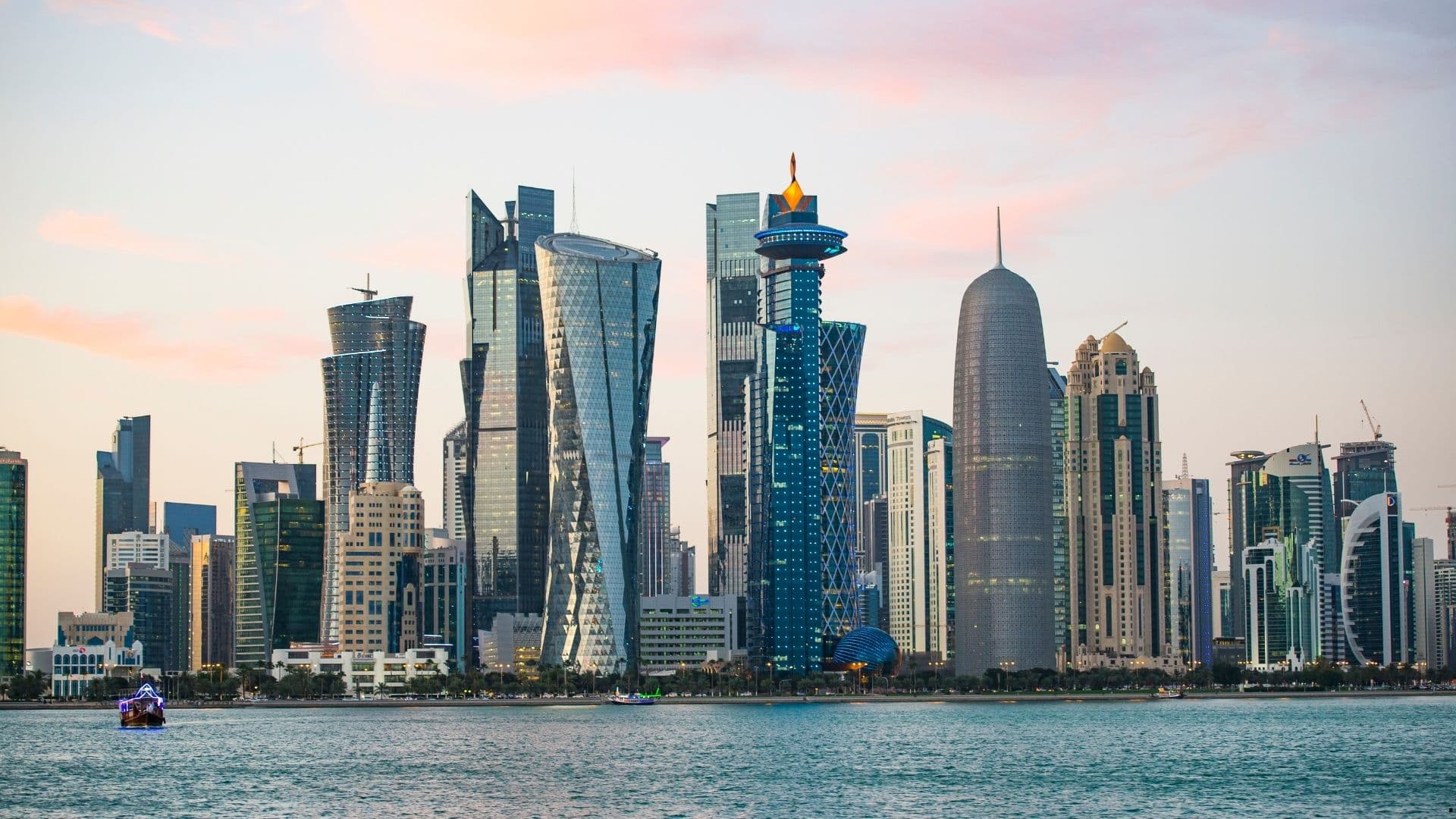
Qatar has made IFRS S1 and S2 mandatory for banks and insurers from 1 January 2026, the first hard International Sustainability Standards Board (ISSB) mandate in the Gulf Cooperation Council (GCC). Bahrain’s rules are already live, Oman and Kuwait have moved from guidance into requirements, and the UAE and Saudi Arabia are converging on the same ISSB shape without yet fixing a date. Because these standards demand continuous, governed data tied to the financial statements rather than an annual write-up, the work is shifting from the communications team towards finance and data, and one governed dataset can serve filings across Doha, Riyadh and Manama at once.
Key takeaways:
- Qatar has made IFRS S1 and S2 a legal obligation for banks and insurers from 1 January 2026, the first hard ISSB mandate in the GCC.
- Bahrain’s ESG module is operational, Oman and Kuwait have moved from guidance into rules, and the UAE and Saudi Arabia are converging on the ISSB shape without yet fixing a date.
- S1 and S2 cover the same reporting entity and period as the accounts, connect to the financial statements, and are heading towards external assurance.
- Because the standards call for continuous, governed data rather than a periodic write-up, the work is shifting from communications towards finance and data.
- One governed dataset can support filings across several GCC markets, which matters in a region where most large companies report in multiple jurisdictions at once.
The Gulf has crossed a line
Sustainability reporting in the Gulf has moved from an annual brochure to a regulated financial disclosure. For most of the last decade it was a glossy document published once a year, admired for a week, then filed away. In 2026 that stopped being the whole story.
On 1 January 2026, the Qatar Central Bank’s Sustainability Reporting Framework, issued in December 2025, brought banks and insurers inside a full IFRS S1 and S2 obligation, developed in line with the ISSB standards and reported to the regulator every year. This is no longer guidance. Qatari financial institutions now report absolute Scope 1, 2 and 3 greenhouse gas emissions under IFRS S2 as a condition of doing business.
The difficulty for many boards is that the habits built around annual reporting are poorly suited to what the standards now demand.
What S1 and S2 actually require
The two standards do different jobs. IFRS S1 sets the general requirements for disclosing sustainability-related risks and opportunities that could affect a company’s cash flows, access to finance or cost of capital. IFRS S2 narrows to climate and follows the four pillars carried over from the Task Force on Climate-related Financial Disclosures (TCFD): governance, strategy, risk management, and metrics and targets. Under S2, that final pillar means absolute gross Scope 1, Scope 2 and Scope 3 greenhouse gas emissions, calculated on the Greenhouse Gas Protocol (GHG Protocol).
Read the requirements closely and a pattern appears. S1 and S2 apply to the same reporting entity as the financial statements, cover the same reporting period, and are designed to be published alongside the accounts. In Qatar, first-year filers may publish their sustainability disclosures shortly after the financial statements, but from the second year they must land at the same time. The direction of travel is clear, and it points at the finance function.
A number you can sign, file and defend
An emissions figure now has to behave like an audited financial number. Consider how audited financial statements are produced: the figures come out of ledgers that are maintained continuously, controlled, reconciled and evidenced, so that when the auditor arrives the answer already exists. S1 and S2 are being built to work the same way, and assurance is coming. Qatar’s central bank has already said it will develop an assurance framework for sustainability information, and across the region reasonable assurance is the destination rather than a distant idea.
An emissions number that can be signed, filed with a regulator and defended to a lender is a different object from a figure assembled in a spreadsheet days before a deadline. See our note on why ESG software has to earn three kinds of trust for why signing, filing and defending a number are three separate tests, each of which a spreadsheet tends to fail.
Once disclosure is continuous and subject to assurance, it needs the same standing data foundation that financial reporting relies on, maintained through the year rather than assembled at the end of it.
The GCC timelines differ, market by market
The Gulf is not moving at one speed. The obligations land on different dates and catch different entities, so the practical task is consistency across markets rather than meeting any single deadline.
Qatar leads. Alongside the central bank framework for financial institutions, the Qatar Financial Markets Authority (QFMA) Governance Code for listed companies requires environmental and social disclosure in the annual governance report.
Bahrain is already running. The Central Bank of Bahrain’s ESG requirements module, issued in November 2023, applies from financial year 2024 to listed companies, banks, financing companies, insurers and category 1 and 2 investment firms.
Oman and Kuwait have crossed from guidance into rules. Oman’s Financial Services Authority (FSA) already requires public joint-stock companies listed on the Muscat Stock Exchange (MSX) to publish board-approved ESG disclosures against a 30-metric guide, and its draft circular would apply IFRS S1 and S2 from 2029, with Scope 3 from 2030. Kuwait’s Capital Market Authority required Premier Market companies, under CMA Circular 04/2025, to publish an FY2025 sustainability report by 30 June 2026, and Boursa Kuwait’s ESG Disclosure Guide recognises IFRS S1 and S2 among the accepted frameworks.
The UAE has had mandatory listed-company sustainability reporting since financial year 2020 under the Securities and Commodities Authority (SCA) corporate governance rules, with the exchanges supplying the metrics. The Dubai Financial Market (DFM) Guide to ESG Reporting 2025 adopts double materiality and maps its metrics to the Global Reporting Initiative (GRI) and IFRS S1 and S2, the clearest public signal of where UAE reporting is heading. The Abu Dhabi Global Market (ADGM) goes further with a hard threshold, catching registered entities above US$68 million in turnover and fund and asset managers above US$6 billion in assets under management, which must report against a recognised standard such as ISSB, or explain. No UAE-wide ISSB mandate is fixed yet, but the shape is already ISSB-shaped.
Saudi Arabia is the largest GCC market where general sustainability disclosure is still voluntary, and it is the one to watch most closely. The Saudi Organization for Chartered and Professional Accountants (SOCPA) has an agreement with the IFRS Foundation to translate S1 and S2 and has reviewed both, while the Capital Market Authority (CMA) and Saudi Exchange (Tadawul) have signalled ISSB and TCFD as the destination. No mandatory date has been announced. What is already binding is issuance-linked: any issuer pricing green, social, sustainability or sustainability-linked debt under the CMA’s 2025 guidelines takes on framework, external-review and ongoing-reporting obligations from the day the paper prices. In the Kingdom the trigger is often a bond, not a deadline.
Six markets, six timelines, one underlying data model. Handling each as a separate reporting project repeats the same work several times over.
One dataset across jurisdictions
A shared data foundation is what turns six timelines into one workload. The ISSB baseline gives a Gulf group a single way to structure climate and sustainability data that can satisfy Doha today, Manama already, and Riyadh the moment SOCPA lands a date. For companies that also touch Türkiye under the Turkish Sustainability Reporting Standards (TSRS) or Pakistan under the Securities and Exchange Commission of Pakistan (SECP) phased rollout, the same dataset carries across borders.
The catch is that parallel obligations do not automatically satisfy each other. A Qatari bank compliant with IFRS S2 is not therefore compliant with the UAE Climate Law, which runs its own measurement and reporting methodology through a separate submission system. Treating each filing as a bespoke annual project multiplies cost and risk, while producing every filing from one governed dataset keeps them consistent and cheaper to assure. In practice, the Carbon Border Adjustment Mechanism (CBAM), ISSB and local climate law increasingly draw on the same underlying data rather than requiring separate campaigns. See our note on what GCC steel and aluminium exporters owe under CBAM in 2026 for a live example of one dataset answering several regulators.
The December 2025 amendments land squarely on banks
The most consequential recent change speaks directly to financial institutions. On 11 December 2025 the ISSB issued targeted amendments to IFRS S2 on greenhouse gas emissions disclosures, effective for annual periods beginning on or after 1 January 2027, with early application permitted.
The headline relief lets an entity limit its Scope 3 Category 15 disclosure to financed emissions, the emissions attributable to its loans and investments, while still disclosing a financed-emissions subtotal. The amendments also allow classification systems beyond the Global Industry Classification Standard (GICS) for disaggregating financed emissions, and provide jurisdictional reliefs on measurement method and warming-potential values. For Qatari banks already inside an annual S1 and S2 obligation, this is not academic. It defines how their hardest number, the emissions of everyone they lend to and invest in, must be built and shown. Financed emissions, measured on methodologies such as the Partnership for Carbon Accounting Financials (PCAF) standard, now sit firmly inside mainstream financial reporting rather than a voluntary ESG footnote, and they call for a data pipeline maintained throughout the year rather than reconstructed at quarter-end.
What a well-run disclosure process needs
Disclosure that can withstand assurance shares a few concrete properties.
It governs its factors. Emission factors move a reported footprint even when operations do not change, so the factor set has to be chosen, versioned and locked, not pulled ad hoc from whichever source is nearest. See our note on governing DEFRA, IEA and local utility factors in the GCC for why this is the foundation of a defensible number.
It versions its methodology and keeps an audit trail. When a boundary shifts, a supplier input is corrected, or a prior year is restated, the process records what changed, why, and whether history was restated. That discipline, familiar from product carbon footprints without version-control chaos, is what makes the eventual assurance visit uneventful.
It treats Scope 3 as a standing capability rather than a year-end effort. The categories that dominate a Gulf company’s footprint, purchased goods and services above all, are the ones with the least clean data, and they cannot be reconstructed from memory each December. See our note on why Scope 3 Category 1 feels impossible for GCC builders for how wide that gap runs in this region.
And it connects to strategy and targets, because S2 asks for both. A transition plan and a credible target are disclosures in their own right, which is the shift the SBTi Net-Zero Standard Version 2 is pushing towards: from ambition on paper to delivery a company can evidence.
Where to start
You do not need every jurisdiction solved on day one. You need the data model right. Map your obligations across the markets you operate in, identify the reporting entity and period, and stand up one governed source for activity data, factors and evidence before the next filing window, rather than after it. Financial-services and listed groups feel the pressure first, so if you sit in a bank, an insurer, a Tadawul or exchange-listed issuer, or a Public Investment Fund (PIF)-backed developer raising sustainable debt, this is already a near-term priority.
The companies that handle the next few years well will be the ones whose disclosure is maintained continuously and evidenced as it goes, so that each filing becomes a matter of retrieval rather than reconstruction.
FAQ
Is IFRS S1 and S2 mandatory in the GCC?
It depends on the market. Qatar has made IFRS S1 and S2 mandatory for banks and insurers from 1 January 2026 through the Qatar Central Bank, the first hard ISSB mandate in the GCC. Bahrain, Oman and Kuwait have binding ESG disclosure rules that recognise or point towards ISSB, though Oman’s full IFRS S1 and S2 application is phased to 2029. The UAE and Saudi Arabia have not fixed a mandatory ISSB date, though both are clearly converging on the ISSB shape.
What is the difference between IFRS S1 and IFRS S2?
IFRS S1 sets the general requirements for disclosing any sustainability-related risk or opportunity that could affect a company’s financial position or prospects. IFRS S2 focuses specifically on climate and requires disclosure across governance, strategy, risk management, and metrics and targets, including absolute Scope 1, 2 and 3 greenhouse gas emissions.
Does IFRS S2 require Scope 3 emissions?
Yes. IFRS S2 requires disclosure of material Scope 3 emissions. The December 2025 amendments, effective from 2027 with early application permitted, allow financial institutions to limit their Scope 3 Category 15 disclosure to financed emissions and offer related reliefs on classification and measurement.
When do the December 2025 IFRS S2 amendments take effect?
The amendments to greenhouse gas emissions disclosures are effective for annual reporting periods beginning on or after 1 January 2027, with early application permitted so companies can adapt their systems ahead of time.
What does Saudi Arabia require today?
General sustainability disclosure in Saudi Arabia is still voluntary, with SOCPA translating and reviewing IFRS S1 and S2 and no mandatory date announced. What is binding is issuance-linked: issuers of green, social, sustainability or sustainability-linked debt take on framework, external-review and ongoing-reporting obligations under the CMA’s 2025 guidelines.
Put it into practice
Coral is AI-powered sustainability infrastructure built for exactly this: one governed dataset for Scope 1, 2 and 3, versioned factors and methodology, a full audit trail, and ISSB-ready output for the regulators you file with across the GCC. Book a demo to see how your Scope 1, 2 and 3 disclosure holds up when it is maintained continuously and built for assurance.
مقالات ذات صلة
 Carbon Markets & Climate Policy٢٥ سبتمبر ٢٠٢٦
Türkiye’s Carbon Market Pilot: 2026 Data Sets Your 2027 Carbon Bill
Türkiye’s Emissions Trading System (TR ETS) regulation entered into force on 27 August 2026. The Carbon Market Board’s first decision (KPK/2026/1) then set a 2026–2027 pilot for Category B and C installations in five sectors: electricity generation, cement, iron and steel, aluminium and fertilisers. 2026 is a reporting-only year, and carbon pricing starts in 2027. […]
 Emissions Reporting١٦ سبتمبر ٢٠٢٦
ESRS E3 Water Disclosure in the GCC: What Boards Need to Know
ESRS E3 is the European standard covering water and marine resources. It requires companies to report water withdrawal, discharge, consumption, recycled and reused volumes and water intensity, with separate disclosure for sites located in areas of high water stress. For companies operating in the GCC, nearly every site meets that definition, which changes the shape […]
 Emissions Reporting١٠ سبتمبر ٢٠٢٦
Dual-Fuel Ships Won’t Cut Your Scope 1 and 3 Automatically
A methanol dual-fuel ship does not lower anyone’s emissions number by itself. What counts is the fuel actually burned and its full lifecycle intensity, measured well-to-wake from production through combustion. Grey methanol, made from natural gas, delivers little to no reduction; only green or bio-methanol, backed by evidence, changes what a Gulf logistics group, port […]