
CBAM in 2026: What GCC Steel and Aluminium Exporters Actually Owe
The EU’s Carbon Border Adjustment Mechanism (CBAM) entered its definitive regime on 1 January 2026, but a GCC steel or aluminium exporter owes very little in certificate cash for 2026, and nothing is payable until 30 September 2027. What is owed now is verified emissions data. The cost curve looks gentle this year and steepens sharply from 2028, so the exporters treating 2026 as a data-readiness year rather than a payment year are the ones who will hold on to their European margins. The Gulf is one of the most CBAM-exposed exporting regions in the world, and almost all of that exposure sits in one metal.
Key takeaways:
- The definitive regime began on 1 January 2026. EU importers are now financially liable for the embedded emissions in every covered shipment, not just reporting them.
- GCC exposure is an aluminium story. Aluminium accounts for roughly 99% of Bahrain’s in-scope exports and between 68% and 75% of the UAE’s, Oman’s, and Saudi Arabia’s.
- The 2026 cash bill is small, deliberately, but the trajectory is the trap. A free-allocation adjustment means only about 2.5% of the gross carbon cost is payable for 2026 imports. That share climbs steeply through 2030 and toward full application by 2034.
- The first payment is not due until 30 September 2027, covering goods imported during 2026. Certificate sales open in February 2027, and a 50-tonne annual threshold exempts the smallest importers entirely.
- Missing verified data is the expensive mistake. Default values are punitive by design, and the mark-up applied on top rises to 30% from 2028.
What actually changed on 1 January 2026
CBAM ran as a reporting-only exercise from October 2023 to December 2025. Importers logged embedded emissions each quarter and paid nothing. That grace period is over.
Under the definitive regime, covered imports of iron and steel, aluminium, cement, fertilisers, hydrogen, and electricity now trigger a financial liability tied to the carbon embedded in the goods. The liability is settled through the purchase and surrender of CBAM certificates, priced to mirror what EU producers pay under the EU Emissions Trading System. The Omnibus simplification package (Regulation (EU) 2025/2083) softened the edges: it introduced a binding 50-tonne annual exemption, aligned the emissions boundary with the ETS, and clarified the timeline. It did not soften the core principle. Carbon is now a payable line item on European trade.
For aluminium, steel, and iron, the calculation now counts embedded emissions from precursors by default and no longer counts emissions from finishing processes, in line with ETS rules. That is a genuine simplification, and for some Gulf converters it lowers the reported figure.
Who in the GCC is actually exposed
The exposure is concentrated, and it is large. In 2023, the last year with consistent data, the UAE exported around US$2.7 billion of CBAM-covered goods to the EU, more than any other GCC country. Bahrain followed at roughly US$1.3 billion, Saudi Arabia at US$565 million, and Oman at US$400 million. Kuwait and Qatar are, for now, barely in scope.
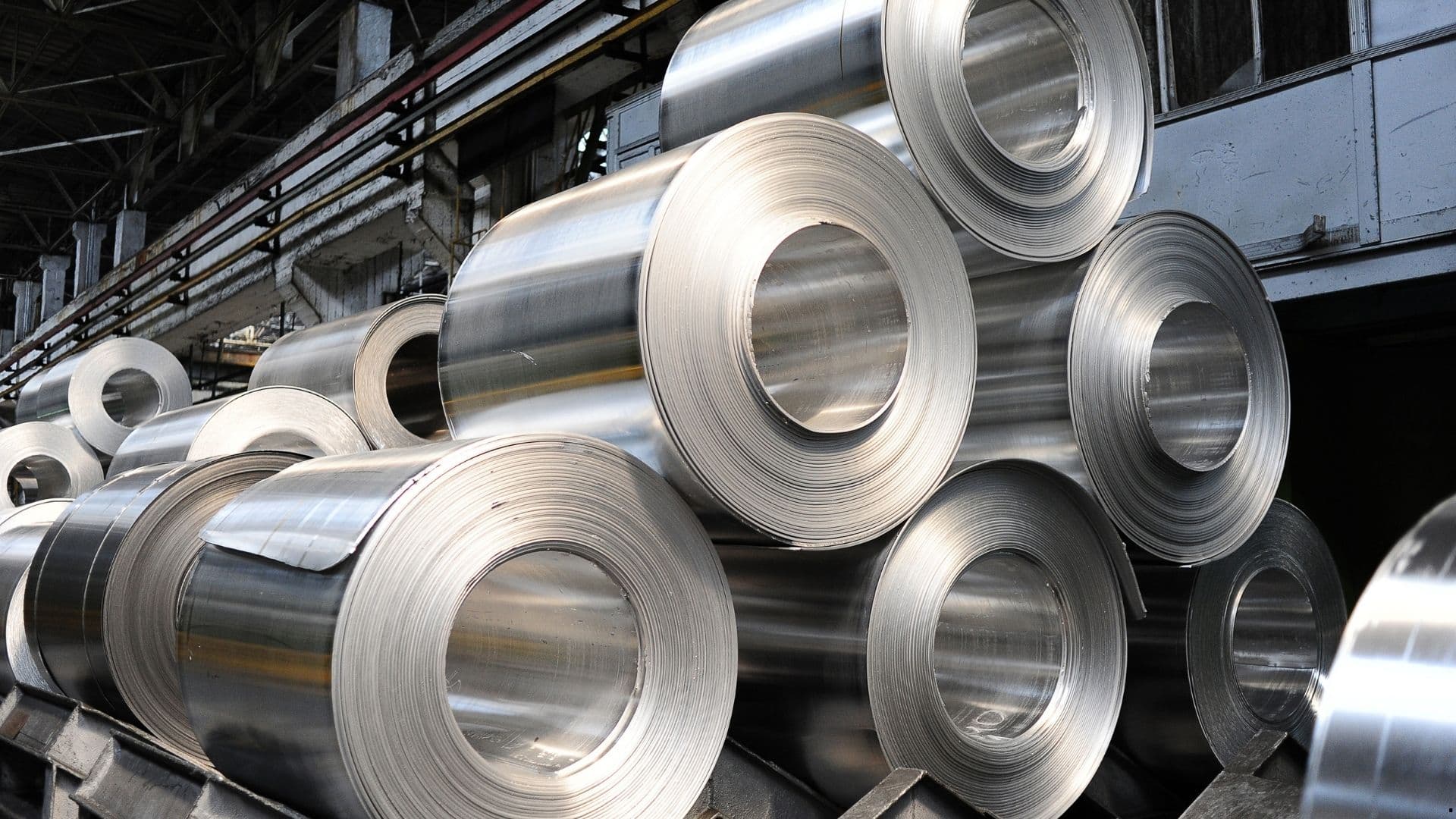
Aluminium is the reason. It makes up about 99% of Bahrain’s covered exports and between 68% and 75% of covered exports from the UAE, Oman, and Saudi Arabia. This tracks the region’s place in global production: the UAE is the world’s seventh-largest aluminium producer, Bahrain the ninth, and Saudi Arabia the thirteenth. Measured against the size of the economy, Bahrain is the most exposed country in the entire Gulf, with covered exports worth close to 2.9% of GDP.
In plain terms: a policy written in Brussels lands hardest on a handful of Gulf smelters and the steelmakers feeding European construction and automotive supply chains.
So what does a GCC exporter actually owe?
This is where the picture gets more nuanced than most summaries suggest, and where the real story sits. There are three layers, and they do not point the same way.
Layer one, the legal owner: the EU importer. CBAM’s certificate obligation falls on the authorised declarant established in the EU, not on the Gulf producer. Legally, a smelter in Abu Dhabi or Bahrain owes nothing to the mechanism.
Layer two, the commercial reality: the exporter. European buyers do not absorb carbon costs quietly. They pass them back through lower offer prices, renegotiated contracts, or a switch to a lower-carbon supplier. So the cost lands on the Gulf exporter in every way that matters to a profit-and-loss (P\&L) statement, even though the exporter never touches a certificate.
Layer three, the 2026 number: smaller than the headlines suggest. Because EU producers still receive free ETS allowances during the phase-in, the CBAM bill is discounted by the same amount. For 2026, roughly 97.5% of free allocation remains in place, so only about 2.5% of the gross carbon cost is actually payable. On a gross default charge of, say, €80 per tonne of product, the net 2026 obligation is close to €2. That is the figure that gives false comfort.
Because the trap is the trajectory. That 2.5% share was scheduled to climb to roughly 48.5% by 2030 and to 100% by 2034 as free allocation is withdrawn. The same shipment that costs €2 net today was on track to cost the full €80 within a decade. The 2026 invoice is a preview, not the price.
Pricing gives the scale. The Commission set the first CBAM certificate price at €75.36 per tonne of carbon dioxide equivalent (CO₂e) for Q1 2026, and €75.28 for Q2. Prices are set quarterly in 2026 from ETS auction averages, then weekly from 2027. Certificate purchases open on the central EU platform in February 2027, and the first annual declaration and surrender, covering 2026 imports, is due by 30 September 2027.
The default-value trap, and why it is the real cost in 2026
If there is one thing worth acting on this year, it is this: the price of not having verified data is far higher than the price of the carbon itself.
Exporters can supply verified, installation-level emissions data, or the importer falls back on default values. Those defaults are set deliberately high, to reward accurate reporting and punish its absence. They reflect the emission intensity of the worst-performing installations and high country-sector averages, and the punitive mark-up applied on top rises to 30% from 2028.
The gap is not trivial for Gulf aluminium. Reuters calculations, working from draft default values and an €80 carbon price, put primary aluminium from the UAE at a gross CBAM charge of about €51 per tonne under defaults. A low-carbon Gulf smelter running on cleaner power could carry a genuine emissions figure well below that. Without verified data, it pays the high number anyway, and hands a low-carbon advantage back to the mechanism for free.
There is a second lever specific to the region. A carbon price already paid in the country of origin can be deducted from the CBAM obligation. As GCC carbon pricing frameworks mature, that deduction becomes a direct reason to formalise domestic mechanisms rather than let the value accrue to the EU treasury.
The verified-data problem is the same one Gulf construction suppliers already face with embedded carbon in concrete, steel, and aluminium. (See our blog on the construction emissions disclosure gap and Scope 3 Category 1 for GCC builders for how thin the region’s verified Environmental Product Declaration library still is.) The exporters who solve it once, properly, solve it for CBAM, for their European customers’ own disclosures, and for every buyer request that follows.
The July 2026 news: does the ETS reform let the Gulf off the hook?
Short answer: no, but it changes the timing. On 17 July 2026 the European Commission published a major review of the EU ETS. For CBAM sectors it proposes to slow the withdrawal of free allocation, reintroducing 15% of the allowances that would otherwise have been removed from 2028, and extending the full phase-out from 2034 to 2038.
For a Gulf exporter, this is a longer runway, not a smaller destination. The steep years still arrive; they arrive later and slightly flatter. Two cautions apply. First, the proposal is not yet law and must pass the European Parliament and Council, so nothing in current CBAM obligations changes today. Second, European industry groups have already argued the relief does little to reduce investment uncertainty, which means the final text could shift again. Planning around a delay that is not yet enacted is a risk in itself.
The direction of travel is also widening, not narrowing. The Commission has signalled an expansion of CBAM scope from 2028 to cover downstream steel and aluminium-intensive products, from base-metal fittings to certain appliances, alongside new anti-circumvention rules. More Gulf-made goods, not fewer, are heading into scope.
What GCC exporters should do in 2026
The task this year is data, not payment. Three moves matter most.
Get to verified, installation-level emissions data. Default values are the single largest avoidable cost. Producing an audit-ready figure that survives a European buyer’s scrutiny is the priority, and it depends on locked emission factors, clear boundaries, and a defensible methodology. (See our blog on product carbon footprints without version-control hell for what a governed, restatable footprint actually requires.)
Govern the factors behind the number. A CBAM figure is only as credible as the emission factors underneath it, and in the electricity-heavy Gulf the choice of factor can move a footprint materially. (See our blog on emission factors in the GCC and how to govern them.)
Treat carbon data as a commercial asset, not a compliance chore. A verified low-carbon figure is a reason for a European buyer to choose a Gulf smelter over a higher-carbon rival. The producers building that data capability now are converting a regulatory cost into a sales argument.
Frequently asked questions
Does CBAM apply to GCC exporters or to EU importers?
The legal obligation to buy and surrender certificates falls on the EU importer. The cost is passed back to the Gulf exporter commercially, and the exporter is the one who must supply verified emissions data to avoid punitive defaults.
How much does a CBAM certificate cost in 2026?
€75.36 per tonne of CO₂e for Q1 2026 and €75.28 for Q2, set quarterly from EU ETS auction averages. Only a fraction of the gross cost is payable in 2026 because of the free-allocation adjustment.
When is the first CBAM payment due?
By 30 September 2027, covering imports made during 2026. Certificate purchases open on the central EU platform in February 2027.
What happens if an exporter cannot provide verified data?
The importer uses default values, which are set high on purpose and carry a mark-up that rises to 30% from 2028. The exporter effectively pays for emissions it may not have produced.
Does the July 2026 ETS reform reduce Gulf exposure?
It delays the steepest cost years by extending the free-allocation phase-out to 2038, but it does not remove the obligation, and it is not yet law.
Is there a minimum threshold?
Yes. Importers bringing in less than 50 tonnes of net CBAM goods per year are fully exempt from reporting, authorisation, and certificate purchase.
Turn CBAM exposure into a competitive advantage
CBAM rewards the exporters who can prove their carbon, and penalises the ones who cannot. Coral gives GCC steel and aluminium producers audit-ready, installation-level emissions data built to withstand a European buyer’s scrutiny, from Scope 1 and 2 through embedded product footprints.
Book a demo to see how Coral turns CBAM readiness into a reason buyers choose you, or explore our Emissions Management System and regulatory coverage.
This article is for general information and does not constitute legal or compliance advice. CBAM rules are evolving; confirm current obligations against official European Commission guidance.
مقالات ذات صلة