
Saudi Arabia’s 2GW Battery Storage Deal and the Scope 2 Accounting Gap
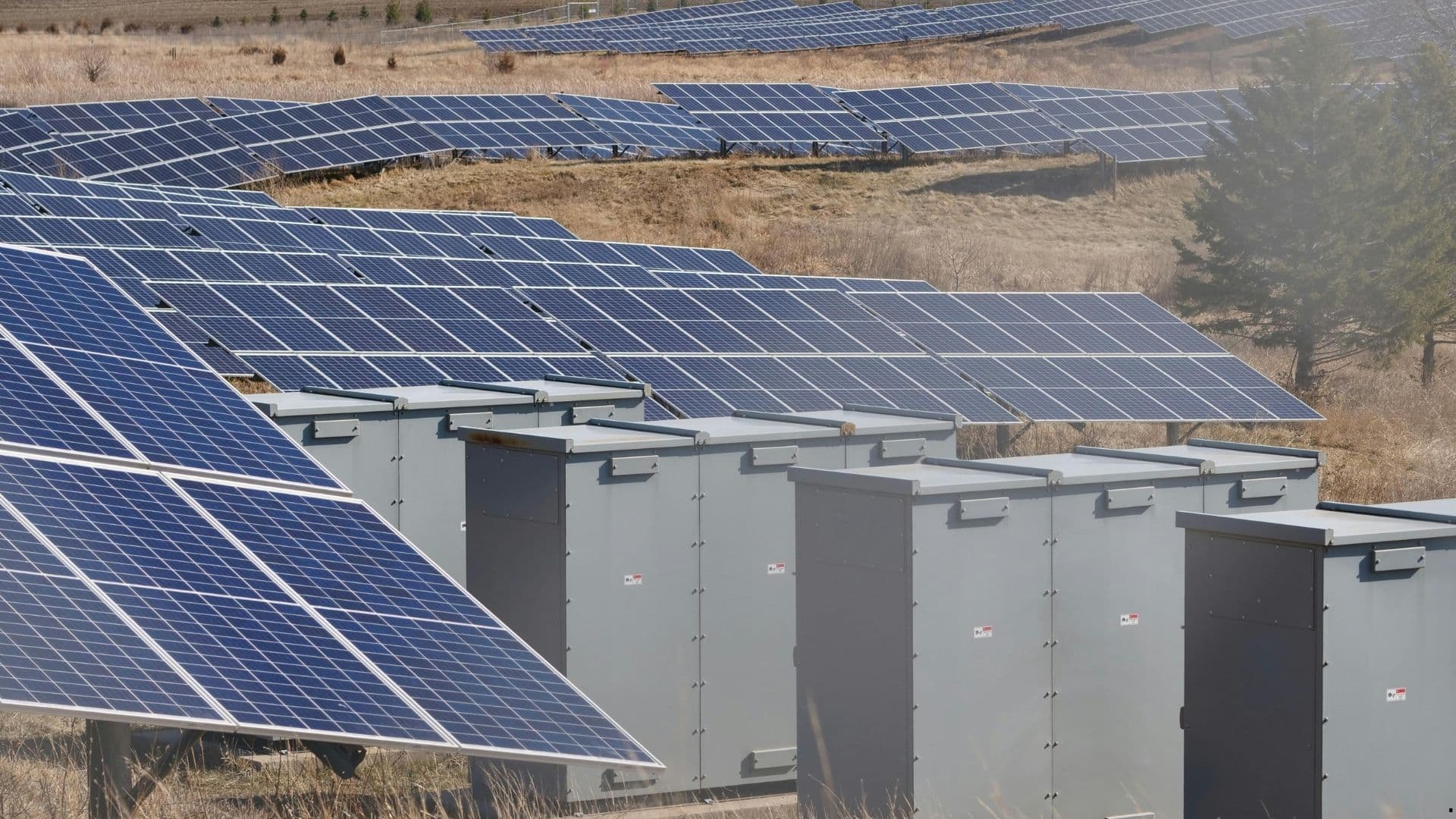
On 20 August 2026, the Saudi Power Procurement Company (SPPC), Saudi Arabia’s principal buyer of electricity, signed four agreements for 2GW of battery energy storage worth SAR 4.35 billion. It was the Kingdom’s first award of build-own-operate contracts for grid-scale storage. Every headline framed it as a milestone for renewable integration. Almost none mentioned the accounting problem sitting inside it, the one that decides whether a battery actually lowers anyone’s reported emissions. That gap is the story, and it is about to become a live question for every Gulf utility, developer and corporate buyer signing a power contract this year.
A battery does not create clean electricity, it shifts it in time, so whether it cuts emissions depends on when it charges and when it discharges. The Greenhouse Gas Protocol (GHG Protocol) Scope 2 Guidance, published in 2015, has no clear method to credit storage, and its current revision would require hourly matching and deliverability, with a revised standard anticipated in late 2027 and staged implementation to follow. For GCC firms signing storage-linked power contracts now, the risk is a clean-power claim that fails an audit later. The fix is hourly, granular, auditable emissions data, built in from the start.
Key takeaways:
- SPPC, Saudi Arabia’s principal buyer of electricity, signed four 500MW / 2,000MWh battery storage projects on a build-own-operate model, part of a national push toward roughly 50% renewable electricity by 2030.
- A battery does not generate clean power. It shifts power in time, so the carbon it saves depends entirely on when it charges and when it discharges, hour by hour.
- The Greenhouse Gas Protocol (GHG Protocol), the standard behind almost every corporate emissions figure, published its Scope 2 Guidance in 2015, when grid-scale storage barely existed. That guidance still has no clear method for crediting storage in a Scope 2 inventory.
- That guidance is now in its biggest revision in a decade. A proposed hourly matching and deliverability requirement would change how Gulf corporates can claim clean power from storage-backed PPAs.
- For GCC operators, the risk is signing storage-linked contracts now and finding later that the emissions claim behind them does not survive an auditor. The fix is hourly, granular, auditable data, built in from the start.
What Saudi Arabia actually signed
The four projects, confirmed by SPPC, are Muwayh and Haden in Makkah province, Al Kahfah in Hail, and Al Khushaybi in Qassim. Each is 500MW with four-hour duration, 2,000MWh apiece, for a combined 2GW / 8GWh. Three went to a consortium of Saudi Energy Company, ACWA Power and Al Sharif Contracting; the fourth to a consortium of ENGIE and Haji Abdullah Alireza. The developers signed 15-year storage service agreements and retain full equity in their project companies.
This is the first batch of a much larger pipeline. SPPC has already pre-qualified 27 bidders for a second round of roughly 12GWh, and the programme exists to support the Kingdom’s target of close to 50% renewable electricity by 2030. Storage is the piece that makes that target physically possible: solar produces at midday, demand peaks after sunset, and batteries move the energy across that gap.
So far, so clean. Here is where it gets complicated.
Why a battery is not a solar panel (for carbon accounting)
A solar farm creates zero-carbon electricity. A battery creates nothing. It takes electricity off the grid, holds it, and puts it back later, losing around 10 to 15% along the way to round-trip inefficiency.
Whether that action reduces or increases emissions depends entirely on the carbon intensity of the grid at each moment. Grid carbon intensity swings hour by hour: cleaner overnight when baseload and wind dominate, dirtier when gas or oil peaking plants ramp up. A battery that charges on cheap midday solar and discharges into the evening peak displaces fossil generation and cuts emissions. A battery that charges on gas-heavy night power and discharges into a relatively cleaner afternoon can raise net emissions while still looking like a green asset on a balance sheet.
In the Gulf, where the grid is still heavily gas-fired and solar is concentrated in a narrow midday window, this timing question is not academic. The same 500MW battery can be a decarbonisation tool or a quiet source of extra emissions depending on how it is dispatched. Nothing in a conventional annual emissions report captures that difference.
The standard that has not caught up
Almost every corporate emissions number in the world is built on the GHG Protocol, the accounting framework that defines Scope 1, 2 and 3 and underpins IFRS S2, the EU’s Corporate Sustainability Reporting Directive (CSRD), and the disclosure rules now landing across the GCC. Its Scope 2 Guidance, the part that governs purchased electricity, was written in 2015. At that point utility-scale batteries barely existed as a category.
The result is a genuine gap. The market-based method lets a company buy a renewable energy certificate (REC) generated anywhere in the country, at any time of year, and claim zero-emission electricity, even if the actual power flowing into its site at that moment came from a gas plant. Storage was never modelled at all. A battery can shift a company’s real, physical emissions around the clock, and the standard has no clean way to reflect it.
For a Gulf corporate signing a power purchase agreement (PPA) linked to one of these new Saudi storage assets, that is a real exposure. You can pay for storage-firmed renewable power, book it as clean in your inventory, and still be running on fossil electrons at the hours that matter, with a claim that looks fine today and fragile the moment the rules tighten.
The recent development that changes the timeline
The rules are tightening right now. In October 2025 the GHG Protocol opened public consultations on the biggest Scope 2 revision in a decade. The centrepiece is a proposed hourly matching and deliverability requirement: clean-energy claims would have to align with the time and place electricity is actually consumed, rather than being matched to an annual certificate bought from anywhere.
The first consultation window closed on 31 January 2026. A second consultation is expected during 2026, with the revised standard anticipated in late 2027 and staged implementation phasing in over the following years. Energy attribute certificates will face stricter tests on vintage, additionality and deliverability.
Hourly matching is precisely the lens through which storage finally makes sense in carbon accounting. Once claims are time-stamped, a battery that discharges clean power into a dirty evening peak can be credited for what it genuinely displaces, and one that does the opposite can no longer hide inside an annual average. The catch is that hourly matching demands hourly data: granular, time-stamped, auditable, for every asset and every contract. Most GCC reporting infrastructure was never built to produce it.
The market is already moving. BloombergNEF found global corporate clean-power procurement fell about 10% in 2025 to 55.9GW, the first decline in nearly a decade, as power prices and policy uncertainty reshaped buyer behaviour, with Europe, Middle East and Africa volumes down 13%. In the same year it tracked 5.8GW of co-located and hybrid deals, storage-backed structures, as buyers positioned for tighter accounting rules. The companies that wait for the final text will be reconstructing years of hourly data under deadline. The ones preparing now will simply switch it on.
What this means for GCC operators, developers and buyers
The 2GW award creates three groups of people who all inherit this problem, on different timelines.
Utilities and SPPC need to attribute the emissions impact of storage dispatch, not just its megawatts. As corporate PPAs increasingly reference storage-firmed renewable supply, the counterparty on the other side will start asking for hourly, verifiable carbon data behind the contract. Selling “green” firmed power will increasingly mean proving it at the hour of delivery.
Developers and consortia (ACWA Power, ENGIE and the SPVs behind these projects) will find that avoided-emissions and dispatch-carbon data becomes part of what they report to lenders, offtakers and their own group sustainability functions. A storage asset with clean, granular carbon data attached is a more financeable and more sellable asset than one without.
Corporate and industrial buyers signing PPAs linked to these assets carry the reporting risk directly. If your renewable claim rests on storage, and the standard moves to hourly matching, an annual REC will not defend it. This is the same lesson the region already learned about offsets: sourcing through a credible venue does not automatically make a claim defensible, a point explored in our blog on Saudi Arabia’s carbon market and how “authorised” changes what a buyer can legally claim.
There is also a hard-compliance dimension. Across the Gulf, emissions measurement is now law, not preference. The UAE Climate Law has made a defensible GHG inventory a legal obligation with no size threshold, which we cover in our blog on building a GHG inventory that survives a verifier. And as IFRS S1 and S2, the ISSB’s sustainability and climate disclosure standards, move toward mandatory adoption across the GCC (Qatar’s QFCRA has confirmed a mandate from January 2026, with Saudi Arabia’s SOCPA signalling the same direction), Scope 2 figures are shifting from a marketing line toward audited, financial-grade disclosure. A storage-linked Scope 2 claim that cannot be reconstructed hour by hour is exactly the kind of number a verifier flags.
Why this is a data problem before it is an energy problem
Every issue above reduces to the same root cause: a battery’s carbon impact is a time-series question, and most emissions reporting is still built on annual averages. You cannot bolt hourly, auditable carbon accounting onto a spreadsheet after the fact. It has to be captured as the asset operates, factor by factor, hour by hour, with the source and version of every emission factor retained so a prior reporting period can be reproduced years later when an assurer asks.
That discipline, granular activity data, transparent and versioned emission factors, and a defensible line from each figure back to its source, is the difference between a Scope 2 number that survives assurance and one that collapses under it. It is the same principle behind every credible climate claim, whether the subject is an offset retirement or a firmed renewable PPA.
This is where Coral fits. Coral runs Scope 1, 2 and 3 accounting in one governed platform, with Scope 2 handled on both location-based and market-based methods and drawing on a library of more than 100,000 emission factors from 25+ authoritative databases across 234 countries and 651 regions. Every calculation records its factor source, methodology, year and geography. Custom and organisation-specific factors carry version control and an approval audit trail, and reporting years can be locked, so a finalised inventory can be reproduced years later when an assurer asks.
As the GHG Protocol moves toward hourly matching and deliverability, that is the data foundation that lets a Gulf operator make a storage-backed clean-power claim it can actually prove, and feed it straight into IFRS/ISSB, CSRD/ESRS and GRI disclosure workflows rather than assembling it under deadline.
Saudi Arabia has built the storage. The advantage now goes to the Gulf companies that can measure what it actually does to their carbon, at the hour it happens, and prove it.
Book a demo to see how Coral turns storage-linked and renewable power contracts into audit-ready Scope 2 data, or explore the Emissions Management System and ESG Reporting solutions.
Frequently asked questions
Does a battery reduce a company’s carbon emissions?
Not automatically. A battery shifts electricity in time rather than generating it, so its carbon impact depends on the grid’s carbon intensity when it charges versus when it discharges. Charging on clean midday solar and discharging into a fossil-heavy evening peak cuts emissions; the reverse can raise them. Round-trip losses of 10 to 15% also mean some energy is lost in the cycle.
How is battery storage treated under the GHG Protocol?
There is no dedicated method yet. The GHG Protocol’s Scope 2 Guidance was published in 2015, before grid-scale storage was common, and it does not clearly credit storage in a corporate inventory. The current revision, with proposed hourly matching and deliverability requirements, is the first serious attempt to close that gap.
When do the new Scope 2 rules take effect?
The first public consultation closed on 31 January 2026, and a second consultation is expected during 2026. The revised standard is anticipated in late 2027, with staged implementation phasing in over the following years. Frameworks such as SBTi, CDP and CSRD are expected to layer their own transition timelines on top, and GHG Protocol updates do not flow automatically into IFRS or ESRS, which reference specific existing versions.
Why does this matter for GCC companies specifically?
The Gulf grid is still heavily gas-fired with solar concentrated at midday, so the timing of battery dispatch has a large effect on real emissions. At the same time, the UAE Climate Law and the GCC’s move toward mandatory IFRS S1 and S2 adoption, already confirmed in Qatar, are turning Scope 2 into audited disclosure. A storage-linked claim that cannot be reconstructed hour by hour is a compliance and assurance risk.
What data do you need to account for storage correctly?
Hourly, time-stamped electricity and grid carbon-intensity data for each asset and contract, plus transparent, versioned emission factors that record source, methodology, year and geography. This lets a company match clean-power claims to the hour of consumption and reproduce past reporting periods when an auditor asks.
مقالات ذات صلة
 Emissions Reporting١٥ أكتوبر ٢٠٢٦
AI Data Centres in the GCC: How to Measure Power, Water and Embodied Carbon
Every AI rack in the GCC carries four emissions sources: purchased electricity (Scope 2), backup generators and refrigerants (Scope 1), cooling water that is often desalinated, and embodied carbon in buildings and hardware (Scope 3). In our view, most operators can report electricity well, but few can report all four with evidence. As the UAE […]
 Carbon Markets & Climate Policy٨ أكتوبر ٢٠٢٦
COP31 in Antalya: What Türkiye’s Presidency Means for GCC Companies
COP31 takes place in Antalya, Türkiye, from 9 to 20 November 2026, with Türkiye holding the Presidency and Australia chairing the negotiations. It will not create binding rules for GCC companies. But the summit’s flagship electrification pledge, Türkiye’s new emissions trading system and the EU’s Carbon Border Adjustment Mechanism (CBAM) will change what Turkish and […]
 Carbon Markets & Climate Policy٢٥ سبتمبر ٢٠٢٦
Türkiye’s Carbon Market Pilot: 2026 Data Sets Your 2027 Carbon Bill
Türkiye’s Emissions Trading System (TR ETS) regulation entered into force on 27 August 2026. The Carbon Market Board’s first decision (KPK/2026/1) then set a 2026–2027 pilot for Category B and C installations in five sectors: electricity generation, cement, iron and steel, aluminium and fertilisers. 2026 is a reporting-only year, and carbon pricing starts in 2027. […]