
Hospitality Scope 3 Reality: Guest Travel & Procurement Data You Can Actually Collect
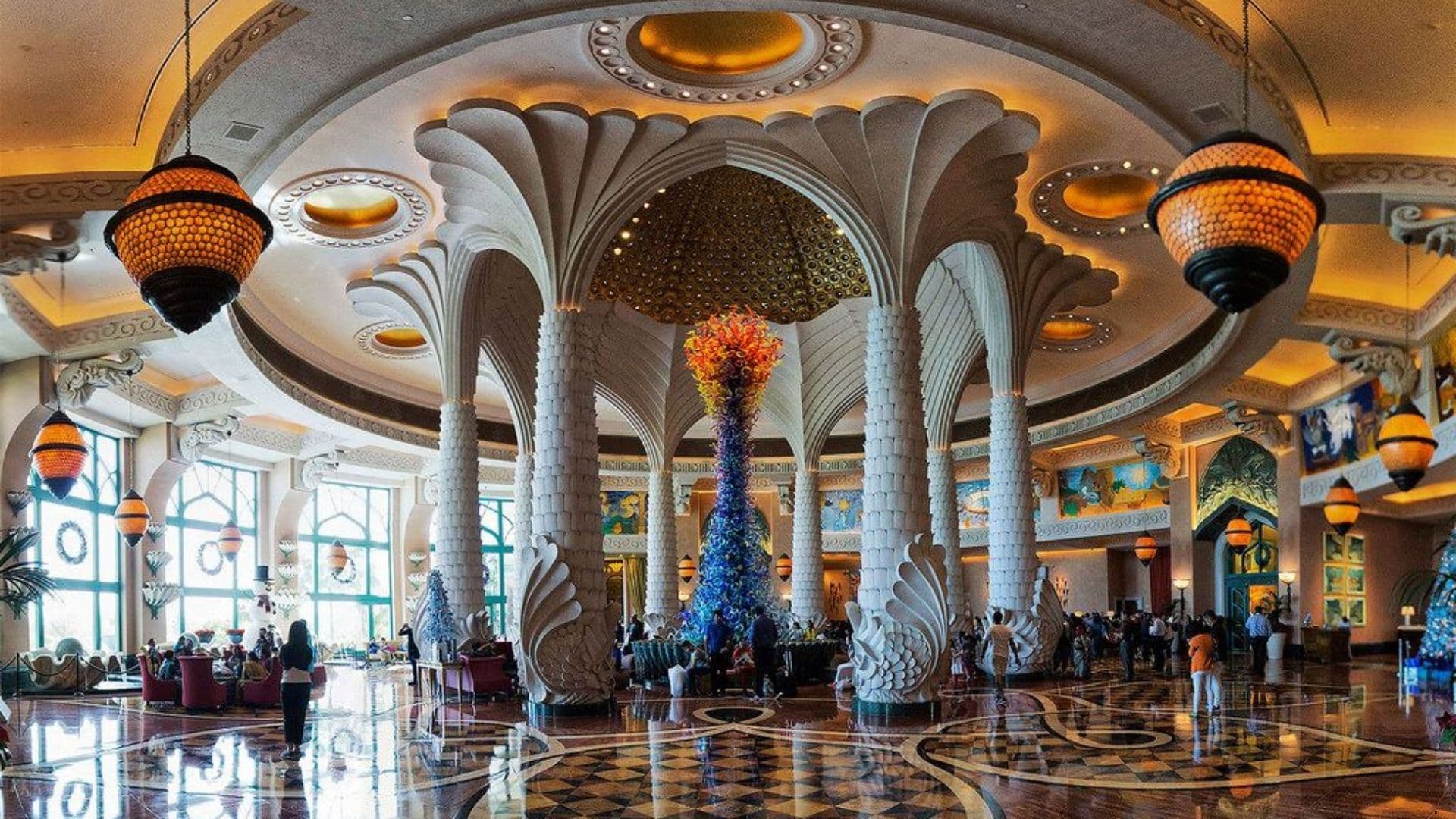
GCC hospitality groups do not need to chase all 15 Scope 3 categories at once and drown in complexity from day one. The smarter move is to start where the data is already within reach: guest travel the hotel can actually see, influence, or arrange, and procurement categories that already flow through daily operations, especially food and beverage, outsourced services, amenities, and major fit-out or refurbishment purchases. This is not a shortcut. It is the practical path the Greenhouse Gas Protocol itself supports, by encouraging methods that match real-world data availability, quality, and effort. The hotel sector’s own net-zero methodology points in the same direction, giving hotels a realistic way to expand Scope 3 coverage over time without losing credibility at the start.
Key takeaways
- Start with what the hotel can see, influence, or arrange.
- Use spend-based estimates to screen categories, not to make major sourcing decisions forever.
- Build a guest-travel method that is transparent about assumptions.
- Prioritize supplier categories with both high spend and high emissions relevance.
- Keep assumptions, evidence, and factor choices attached to the number from day one.
Why this matters more in the GCC now
Hospitality growth in the Gulf is raising the stakes for Scope 3. Dubai welcomed 19.59 million international overnight visitors in 2025, up 5 percent year on year. Saudi Arabia’s official tourism strategy is targeting 150 million visits by 2030. In the UAE, the Hospitality Advisory Council’s 2026 agenda explicitly links growth with the sustainability of the hotel sector, while MOCCAE’s Sustainable Product initiative aims to raise the share of locally sourced agricultural and animal products used in restaurants and hotels to 25 percent. More guests, more supplier volume, and more policy attention means Scope 3 is moving from a side calculation to an operating question. (Source: Government of Dubai Media Office)
It is also becoming harder to treat Scope 3 as optional. For hospitality groups reporting under IFRS S2, entities must consider their entire value chain and all 15 GHG Protocol Scope 3 categories, then disclose which relevant categories are included in their Scope 3 measure. For groups in scope of Europe’s ESRS E1, significant Scope 3 categories must also be disclosed. Even where local hotel regulation does not yet spell out every Scope 3 category line by line, investors and multinational brands are increasingly asking for value-chain data that stands up to review.
Hotels feel this pressure fast because the biggest Scope 3 categories usually sit outside the engineering team. Guest mobility starts before arrival. Food and beverage runs through multiple vendors. Laundry may be outsourced. Amenities, packaging, and FF\&E often sit in different systems and with different owners. That is why hospitality Scope 3 programs usually break on workflow before they break on methodology.
The Scope 3 mistake hotels keep making
The most common mistake is trying to measure everything at the same level of detail in year one.
That sounds ambitious, but it usually creates one of two outcomes: a baseline that never gets finished, or a number nobody can defend six months later. The GHG Protocol is explicit that companies should choose methods based on the relative size of emissions, data availability, data quality, and the cost and effort required. It also says more specific methods generally produce higher-quality Scope 3 data, but that less specific methods can be used for initial screening and then improved later for priority categories.
For hotels, that logic is especially useful. The Sustainable Hospitality Alliance’s methodology is designed to help hotels get started practically, and its property guide makes clear that net-zero planning will evolve as teams dig into more granular topics like food and beverage, purchasing, and furniture sourcing.
Start with guest travel you can actually see
Not every guest journey is equally measurable. That is the first reality to accept.
The cleanest starting point is transport the hotel arranges directly: airport transfers, shuttle buses, chauffeured pickups, marina transfers, desert transfers, and inter-property shuttles. The hotel net-zero methodology prioritizes guest transport arranged by the hotel within the destination ahead of transport to and from the destination: in the default hierarchy, within-destination transport ranks above to/from-destination transport, and in the default net-zero boundary it is included from 2025. That is exactly why hotel-arranged transport is usually the best first move: the hotel has clearer control, cleaner data, and fewer boundary arguments. (Source: World Sustainable Hospitality Alliance)
After that, most GCC hotels already hold useful guest-travel signals in booking and operations systems. Property Management System records, booking-engine data, loyalty profiles, and group-event manifests often show country of residence, booking market, or airport of arrival. That is not a full itinerary, but it can support a consistent estimation rule when paired with room nights and property location. The GHG Protocol allows different methods for different activities inside the same Scope 3 category, which means hotels do not need one perfect method for every stay type on day one.
Meetings, Incentives, Conferences, and Exhibitions, or MICE, are often easier than transient leisure stays. Group bookings usually come with clearer origin data, known room blocks, event schedules, and sometimes dedicated transfer arrangements. If you want a practical first guest-travel model, start with hotel-arranged transport, then add MICE and corporate blocks, then expand cautiously.
If there is still a blind spot, use a light-touch survey. Abu Dhabi’s hotel sustainability annex recommends guest surveys to understand satisfaction and expectations around sustainability initiatives. The same logic can be extended to simple travel questions such as primary arrival mode or whether the guest used an airport transfer, without turning check-in into an audit.
Then fix procurement, one supplier tier at a time
If guest travel is the most visible Scope 3 challenge, procurement is usually the category that becomes operationally material fastest.
The hotel property guide points teams directly toward purchasing, staff commuting, and building and FF\&E inventory as part of getting started. The broader hotel methodology also treats purchased operating supplies and equipment, food and beverage, and other upstream purchased goods and services as important value-chain sources. (Source: World Sustainable Hospitality Alliance)
That matters even more in the GCC now. In January 2026, the UAE launched the Sustainable Product initiative to increase local agricultural and animal products used in the restaurant and hotel sector to 25 percent. Once local sourcing becomes a policy and brand issue, procurement data stops being back-office admin and starts becoming commercial infrastructure.
The trap is relying on spend-based estimates forever. The GHG Protocol allows a spend-based method for purchased goods and services, but it places spend-based and average-data methods below supplier-specific and hybrid methods in terms of specificity. It also makes clear that supplier-specific data can include product-level cradle-to-gate inventory data from suppliers, while more useful quantity-based approaches rely on mass, units, hours, or similar physical measures. In practice, that means spend is a good screening tool, but not the end-state for a serious hospitality group’s top categories.
A better first-year procurement stack looks like this:
- Food and beverage: Start with high-impact categories such as beef, lamb, dairy, poultry, seafood, rice, bottled beverages, and imported produce.
- Laundry and linen: Request service volumes, facility location, and any available energy or emissions data from outsourced providers.
- Amenities and consumables: Break out soaps, bottles, slippers, paper products, and packaging instead of leaving them in a single miscellaneous line.
- FF\&E and refurbishments: Capture major purchases when the project is live, not after the closeout folder disappears.
- Waste and outsourced services: Pull provider data where possible instead of hiding it inside generic operating spend.
What data can a GCC hotel actually request from suppliers?
Start with a request that matches the maturity of the category and the commercial importance of the supplier:
- product or service name
- quantity and unit
- site or country of production
- delivery mode, if supplier-arranged
- reporting year
- methodology note
- basic emissions data, if available
- evidence attachment such as an Environmental Product Declaration, invoice, specification sheet, or supplier declaration
This approach is consistent with the GHG Protocol’s supplier-specific and hybrid methods, which rely on collecting supplier data directly and combining it with secondary data where gaps remain. For purchased goods and services, the guidance explicitly points companies toward product-level supplier data where available, and otherwise toward physical activity data like kilograms, units, or hours rather than monetary value alone.
You do not need primary data from every supplier in year one. You need a phased program: highest-emissions categories first, largest suppliers first, then a repeatable cadence. That is usually a workflow-design problem more than a standards problem. See Coral’s blog on AI Carbon Management in the GCC for the broader operating-model shift.
A defensible first-year hospitality Scope 3 model
If you want something practical enough to survive budget season, executive review, and assurance questions, build it in four layers.
1) Establish the property baseline
Use HCMI to create a consistent stays-and-meetings carbon baseline for each property, including total carbon footprint, carbon footprint per occupied room, and carbon footprint per area of meeting space. HCMI is designed to calculate total carbon footprint, carbon footprint per occupied room, and carbon footprint per area of meeting space. That gives you a solid operational baseline before you layer in wider value-chain categories. (Source: World Sustainable Hospitality Alliance)
2) Add guest travel where the signal is strongest
Start with hotel-arranged transport, MICE blocks, and corporate stays with known origin points. Use estimation rules for the rest, and document the assumptions once.
3) Build a procurement materiality map
Rank categories by spend, emissions relevance, and data availability. In many hotels, food and beverage, outsourced laundry, amenities, and refurbishment-related purchases rise quickly to the top.
4) Freeze methods before chasing precision
Method churn destroys trust. Decide your boundaries, factor source, fallback logic, and evidence requirements early. Then improve coverage and data quality over time. If you need a boundary refresher, see Coral’s explainer on Operational vs. Value Chain Emissions: How They Map to Scope 1, 2, and 3.
What not to do
- Do not ask every supplier for everything at once.
- Do not publish a guest-travel number you cannot explain.
- Do not treat hotel-arranged transport and broad assumptions as if they have the same confidence level.
- Do not let procurement, finance, and sustainability teams use different names for the same category.
- Do not keep spend-based estimates in place forever for categories that drive real sourcing decisions.
Where Coral fits
For hospitality operators, owners, and mixed-asset groups in the GCC, Coral fits best as the governed workflow layer between fragmented hotel data and decision-grade Scope 1 to 3 reporting. Coral’s Emissions Management System is built to centralize operational data, measure Scope 1 to 3 emissions, identify hotspots, generate ESG reports, and monitor progress over time. Coral’s ESG Reporting workflows extend that into structured disclosures aligned with frameworks such as GRI, CSRD/ESRS, ISO 14064-1, and the GHG Protocol.
That matters in hospitality because the hard part is rarely the formula. The hard part is turning invoices, booking data, supplier inputs, laundry contracts, and project purchases into one traceable workflow with evidence attached. Coral’s recent GCC content consistently frames this as the move from fragmented inputs to decision-grade datasets, which is exactly the shift hospitality groups need for Scope 3 to become usable rather than theoretical. See Coral’s blog on Emission factors in the GCC: DEFRA vs IEA vs local utility factors for the governance side, and How Local Supply Chains Influence Scope 3 Emissions for the procurement side.
Next step
If you are a hospitality group in the GCC, the smartest Scope 3 question is not, “How do we measure everything?” It is, “Which guest-travel and procurement data can we collect consistently enough to act on this year?”
Start there. Then improve the resolution.
Explore Coral’s Emissions Management System, see how ESG Reporting fits into the same workflow, or book a demo to see what a hotel-ready Scope 3 data stack can look like.
FAQ
Is guest travel always part of a hotel’s Scope 3 footprint?
Not in the same way for every hotel. The hotel net-zero methodology specifically identifies transportation of guests arranged by the hotel within the destination as a high-priority source, while transport to and from the destination can depend more heavily on the boundary and relationship. That is why hotel-arranged transport is usually the clearest place to start. (Source: World Sustainable Hospitality Alliance)
Should hotels use spend-based procurement data?
Yes, for screening and prioritization. But the GHG Protocol places spend-based methods below supplier-specific and hybrid methods in terms of specificity, so material categories should gradually move toward quantity-based or supplier-specific data where possible.
Which procurement categories should hotels prioritize first?
Usually food and beverage, outsourced laundry, amenities, operating supplies, and major FF\&E or refurbishment purchases. Those categories are visible in hotel operations, often high in spend, and more likely to move the footprint in a meaningful way. (Source: World Sustainable Hospitality Alliance)
Do hotels still need a hospitality-specific property carbon method?
Usually, yes. HCMI gives hotels a standard way to calculate the carbon footprint of stays and meetings, which creates a consistent operational baseline before wider Scope 3 layers are added. (Source: World Sustainable Hospitality Alliance)
What is the biggest reason hospitality Scope 3 programs stall?
Usually not a lack of ambition. It is fragmented data ownership. Guest information, supplier records, invoices, contracts, and evidence often live in different systems and teams. That is why workflow design matters almost as much as methodology. (coral.li)
مقالات ذات صلة
 Carbon Markets & Climate Policy٢٥ سبتمبر ٢٠٢٦
Türkiye’s Carbon Market Pilot: 2026 Data Sets Your 2027 Carbon Bill
Türkiye’s Emissions Trading System (TR ETS) regulation entered into force on 27 August 2026. The Carbon Market Board’s first decision (KPK/2026/1) then set a 2026–2027 pilot for Category B and C installations in five sectors: electricity generation, cement, iron and steel, aluminium and fertilisers. 2026 is a reporting-only year, and carbon pricing starts in 2027. […]
 Emissions Reporting١٦ سبتمبر ٢٠٢٦
ESRS E3 Water Disclosure in the GCC: What Boards Need to Know
ESRS E3 is the European standard covering water and marine resources. It requires companies to report water withdrawal, discharge, consumption, recycled and reused volumes and water intensity, with separate disclosure for sites located in areas of high water stress. For companies operating in the GCC, nearly every site meets that definition, which changes the shape […]
 Emissions Reporting١٠ سبتمبر ٢٠٢٦
Dual-Fuel Ships Won’t Cut Your Scope 1 and 3 Automatically
A methanol dual-fuel ship does not lower anyone’s emissions number by itself. What counts is the fuel actually burned and its full lifecycle intensity, measured well-to-wake from production through combustion. Grey methanol, made from natural gas, delivers little to no reduction; only green or bio-methanol, backed by evidence, changes what a Gulf logistics group, port […]