
Stranded Assets in GCC Real Estate: When Climate Risk Becomes Uninsurable
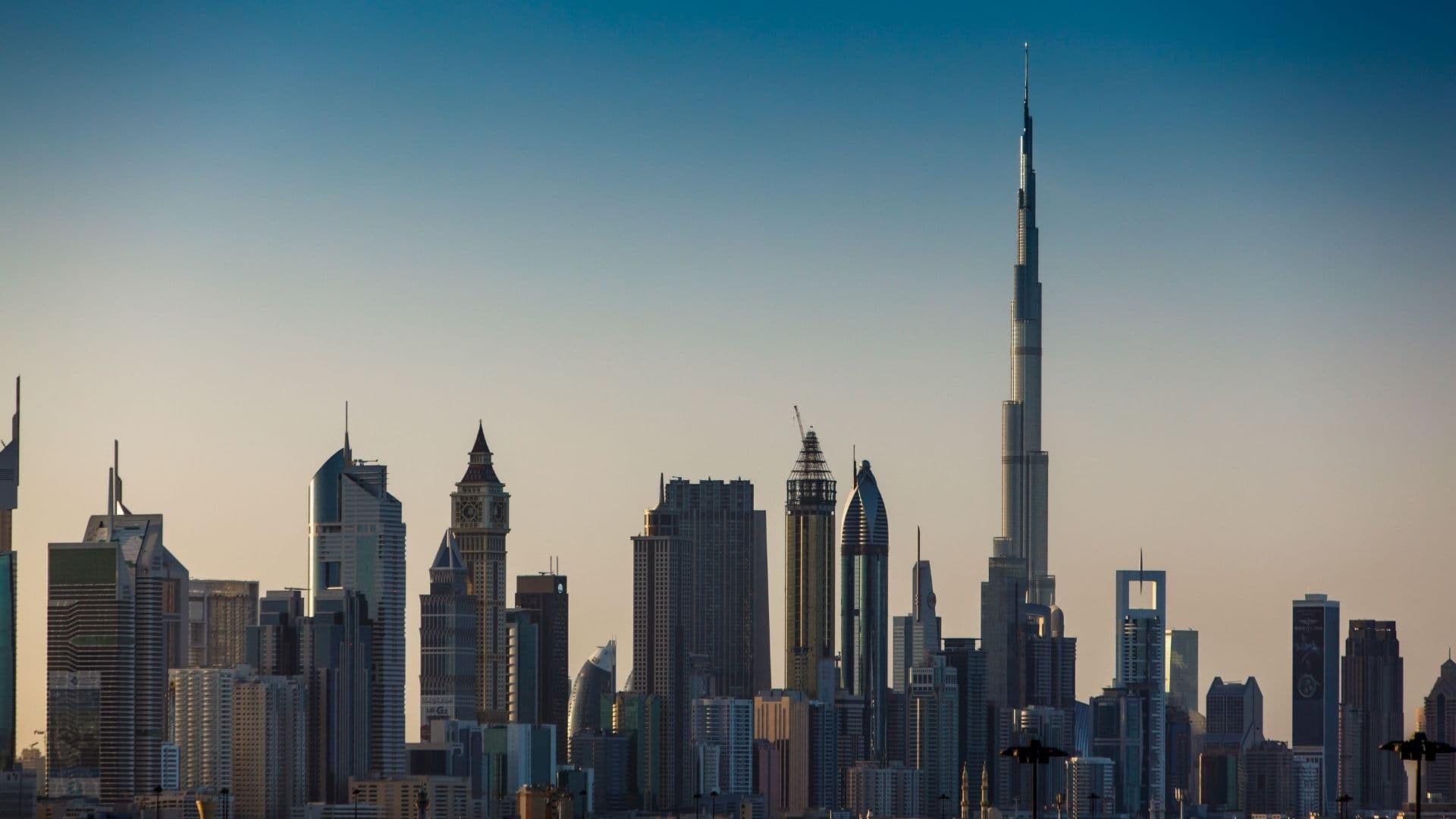
A stranded asset is a building that loses economic value well before the end of its useful life because external conditions shift, whether through physical climate damage, rising insurance costs, or new regulation. In the GCC, all three pressures are converging: the Gulf is warming faster than the global average, the most valuable waterfront stock sits in the most exposed locations, and the UAE Climate Change Law has turned emissions reporting into a legal obligation. Together they feed directly into how buildings are insured, financed, and valued. This article explains how a building becomes “uninsurable” in stages, why the GCC is especially exposed, and what owners can do to defend value.
Key takeaways:
- A stranded asset is a building that loses economic value well before the end of its useful life because external conditions shift, whether through regulation, market repricing, or physical climate damage. (Source: OECD, Future-Proofing Real Estate Investment)
- The Gulf is warming at roughly twice the global average rate, and the April 2024 storms across the UAE and Oman caused around US$3.4 billion in damage and economic losses. (Source: AGBI, on the Gulf “protection gap”)
- After the 2024 Dubai floods, reinsurers raised property rates and added explicit flood sub-limits, so coverage is narrowing even where it has not disappeared. (Source: Global Reinsurance, on the GCC market after the floods)
- Up to 85% of the population and 90% of infrastructure in the UAE’s coastal zones sit in areas exposed to rising sea levels, exactly where much of the region’s premium real estate is built. (Source: EY, on UAE climate legislation)
- The UAE Climate Change Law (Federal Decree-Law No. 11 of 2024) makes Scope 1 and Scope 2 emissions reporting mandatory, with a full-compliance deadline of 30 May 2026 (Scope 3 expected from 2027) and fines from AED 50,000 to AED 2 million. (Source: PwC Middle East)
What “stranded asset” actually means, and why buildings are next
The term started in the fossil fuel world. A coal plant built to run for forty years that regulators shut after fifteen is the classic case: an asset that stops earning a return long before its engineering life is over.
Real estate is now firmly inside the same conversation. The OECD’s analysis of climate-related risks for real estate describes how climate-exposed properties can become illiquid or even unsellable, while poor energy performance creates measurable stranding risk through regulatory obsolescence and impaired financing. A building does not need to be flooded to be stranded. It only needs to become harder to insure, harder to lend against, or harder to sell than the building next door.
There are two routes to that outcome, and the GCC is exposed to both at once.
The first is physical risk: the building gets hit, or is expected to get hit, by floods, extreme heat, storm surge, or sea level rise. The second is transition risk: rules, disclosure requirements, and buyer expectations move, and an inefficient or undocumented asset gets repriced. The Yale Law Journal essay on “the uninsurable future” frames the physical side bluntly, describing a future where rising catastrophe losses pull coverage out of reach. Insurance is where both risks become visible first, because insurers reprice faster than valuers and far faster than the market mood.
Why the GCC is uniquely exposed
It is tempting to file all of this under “a Florida and California problem.” That is a mistake for three reasons specific to this region.
The climate is moving faster here. The Gulf is warming at about twice the global average, according to research cited by AGBI, with summer temperatures in the UAE ranging into the low 50s Celsius. Heat is not just a comfort problem. It drives cooling loads, accelerates material fatigue, and is exactly the kind of chronic stress that insurers now model forward rather than backward.
The most valuable assets sit in the most exposed places. The region’s signature developments are waterfront. Yet EY reports that up to 90% of the UAE’s coastal-zone infrastructure is exposed to sea level rise, and forecasts point to meaningful rise in the Arabian Gulf within the working lifetime of a building bought today. The places that command the highest price per square foot are often the places carrying the highest long-horizon climate risk.
The rain arrived without warning. On 16 April 2024, Dubai recorded roughly 25 cm of rain in about 48 hours, close to twice its typical annual total and the heaviest since records began 75 years earlier, as documented by AXA XL on what reinsurers can learn from the Dubai floods. A region built on the assumption of near-zero rainfall discovered, in two days, that the assumption was outdated. Buildings, drainage, basements, and underwriting models were all calibrated for a climate that no longer reliably shows up.
The insurance squeeze: how “expensive” quietly becomes “uninsurable”
Uninsurable is rarely a single dramatic refusal. It is a gradient, and the GCC has already stepped onto it.
After the 2024 floods, reinsurers (the companies that insure the insurers) pushed up property rates at the major regional renewal and introduced explicit flood sub-limits to cap their exposure, as reported by Global Reinsurance. Those costs flow downhill to primary insurers and then to owners. On the retail end, perils such as rainwater ingress that used to sit quietly inside a standard policy now often carry a separate, lower sub-limit unless an enhanced weather add-on is bought, as InsuranceHub describes for the UAE market.
Read that sequence carefully, because it is the stranding mechanism in slow motion:
- Premiums rise. The asset still cash-flows, but net income tightens.
- Coverage narrows. Sub-limits and exclusions mean the policy covers less of the real risk.
- Capacity tightens. Insurers become selective about which buildings and locations they will write at all.
- Financing reacts. Lenders and valuers price in the higher carrying cost and the harder-to-insure profile.
- The buyer pool shrinks. Fewer buyers, lower bids, and the asset is repriced or sits unsold.
By the time anyone uses the word “uninsurable,” the value has usually already leaked out through steps one to four. The AGBI analysis of the Gulf “protection gap” captures the structural tension neatly: insurers have traditionally priced risk by looking at the past, and the past is no longer a reliable guide to a warming region.
The transition trap: when the rulebook reprices your building
Physical risk gets the headlines. Transition risk is quieter and, for many GCC owners, more immediate, because it is moving from voluntary to mandatory right now.
The biggest signal is regulatory. The UAE Climate Change Law (Federal Decree-Law No. 11 of 2024) came into force on 30 May 2025 and sets a full-compliance deadline of 30 May 2026. It applies across sectors including real estate, covers financial free zones such as the Dubai International Financial Centre (DIFC) and Abu Dhabi Global Market (ADGM), has no minimum-size exemption, and carries fines from AED 50,000 up to AED 2 million (doubling for repeat violations within two years). Mandatory reporting initially covers Scope 1 and Scope 2 emissions, with Scope 3 expected to follow from 2027.
One caveat worth flagging: as of early 2026 the Ministry of Climate Change and Environment (MOCCAE) has signalled that the 30 May 2026 deadline may be extended while technical guidance is finalised, and no revised date has been confirmed. The sensible planning assumption is still 30 May 2026, treating any extension as breathing room rather than a reason to wait. Either way, emissions reporting in the UAE is no longer an ESG talking point. It is a legal obligation with enforcement attached.
That matters for stranding because climate disclosure and asset value are converging. Once a building’s energy and emissions performance is documented in a standardized, comparable way, the gap between an efficient asset and an inefficient one stops being invisible. The OECD notes that energy performance metrics let investors quantify how much climate-vulnerable stock sits in a portfolio and model the losses. Transparency is good for the market and uncomfortable for the laggard asset, because there is nowhere left to hide a poor performer.
This is also where many net-zero stories fall apart in practice. A building can carry a strong design-stage rating and still drift badly once it is occupied and operated, which is precisely how a “green” asset turns into a weak one on the balance sheet. See our blog on why real estate net-zero plans fail after handover for the detailed mechanics of that design-to-operations gap. And because reported numbers can move even when nothing physical changes, the choice and governance of emission factors becomes a live valuation issue: see our blog on emission factors in the GCC: DEFRA vs IEA vs local utility factors for why two honest teams can report different footprints for the same building.
What changed recently, and why it raises the stakes
Three recent shifts turn this from a slow-burn theme into a near-term board issue for GCC owners.
First, the UAE Climate Change Law has moved from future concern to live obligation. Its 30 May 2026 full-compliance deadline has now arrived for in-scope entities, and even if a short extension materialises, the period of “we’ll get to it” is effectively over, per PwC Middle East. Climate data is now a compliance artifact, not a marketing one.
Second, the insurance market has not reset to pre-2024 conditions. Globally, insured natural-catastrophe losses hit record levels in 2024 and stayed elevated into 2025, as the Yale Law Journal details, which keeps reinsurance pricing firm and underwriting disciplined worldwide. The GCC is part of that global capital pool, so regional premiums and terms remain under pressure.
Third, climate risk is now an explicit input into real estate strategy, not an afterthought. Work by Munich Re and JLL on how climate risk is shaping real estate strategy frames resilient buildings as the quality assets of tomorrow and vulnerable buildings as the ones that lose value faster than expected. The market is starting to sort buildings into “resilient” and “at risk,” and that sorting eventually shows up in price.
For the policy backdrop shaping how the UAE and Saudi Arabia are steering this transition, see our blog on what COP outcomes mean for UAE and Saudi net-zero plans.
What good looks like in the GCC
The owners who protect value through this do a handful of things consistently, and none of them is glamorous.
They treat insurance as a forward signal. When a premium jumps or a sub-limit appears, they read it as the market repricing the asset’s risk and respond, rather than absorbing it quietly until the renewal becomes a crisis.
They invest in resilience that is provable. Drainage, waterproofing, backup power, cooling efficiency, and flood defences matter, but only if they can be documented in a way an underwriter, a lender, and a buyer will trust. Resilience that cannot be evidenced is resilience that does not get credit in pricing.
They close the gap between operational reality and reported performance. Utility data, refrigerant and fuel logs, maintenance records, and disclosure evidence need to live in one governed workflow, not scattered across finance, facilities, and a year-end spreadsheet scramble. If your portfolio spans owned, leased, and managed assets, clean boundary thinking is the foundation. See our blog on operational vs. value chain emissions and how they map to Scope 1, 2, and 3.
They build the data layer once and reuse it everywhere. The same governed emissions data can feed UAE Climate Change Law reporting, investor disclosures, lender questionnaires, and insurance submissions. For the broader operating-model shift behind this, see our blog on AI carbon management in the GCC.
The thread connecting all four is evidence. A stranded asset is, at heart, an asset whose owner can no longer convince the market that it is worth what they think it is worth. The defence is decision-grade proof of how the building actually performs and how it is being managed.
Where Coral fits
For owners, developers, operators, and sustainability and finance teams across the GCC, the hard part is rarely ambition. It is traceable evidence across fragmented systems, teams, and contractors. When a building’s operational truth is split across invoices, facilities-management (FM) logs, PDFs, Building Management System (BMS) exports, and email threads, the sustainability and risk story breaks under exactly the scrutiny that insurers, lenders, and valuers now apply.
Coral sits between that fragmented reality and decision-grade output. Coral’s Emissions Management System centralizes operational data, measures Scope 1 to 3 emissions, surfaces hotspots, and produces reporting aligned with the Greenhouse Gas Protocol (GHG Protocol) and ISO 14064-1. Coral’s ESG Reporting extends that into structured disclosures aligned with the Global Reporting Initiative (GRI) and the EU’s Corporate Sustainability Reporting Directive (CSRD) and European Sustainability Reporting Standards (ESRS), with the same governed dataset feeding multiple frameworks at once. To see how that maps to the rules now in force across the region, explore Coral’s regulations resource.
Next step
If your portfolio still treats climate risk as an insurance renewal problem rather than a value problem, the next step is to make your buildings provable: connect operational data, emissions, and resilience evidence into one governed workflow before the next premium notice, lender review, or disclosure deadline forces the issue.
Explore Coral’s Emissions Management System, see how ESG Reporting fits into the same workflow, or book a demo to see what a decision-grade climate-data layer looks like for a GCC real estate portfolio.
FAQ
What is a stranded asset in real estate?
It is a building that loses significant economic value well before the end of its useful life because external conditions change. In a climate context, that can happen through physical damage and rising insurance costs, or through transition pressures such as new regulations, disclosure requirements, and shifting buyer expectations that reprice inefficient or undocumented assets.
Why is the GCC especially exposed to climate-driven stranding?
Because the region is warming faster than the global average, its highest-value assets are often built on exposed waterfront, and a large share of coastal infrastructure sits in sea-level-rise zones. The April 2024 floods showed that severe weather can hit a region long assumed to be low-rainfall, which forced insurers to reprice and add flood sub-limits.
Does a building have to flood to become uninsurable?
No. Uninsurability is usually a gradient, not a single refusal. Premiums rise, coverage narrows through sub-limits and exclusions, capacity tightens, and financing and resale react. Most of the value erosion happens before anyone uses the word “uninsurable,” which is why insurance terms are best read as an early warning signal.
How does the UAE Climate Change Law connect to asset value?
The law (Federal Decree-Law No. 11 of 2024) makes emissions reporting a mandatory legal obligation, with Scope 1 and Scope 2 reporting due by 30 May 2026, Scope 3 expected from 2027, and fines for breaches. Once a building’s energy and emissions performance is documented in a comparable, standardized way, the difference between efficient and inefficient assets becomes visible to investors, lenders, and insurers, which is exactly the transparency that drives transition-risk repricing.
What should a GCC real estate owner do first?
Start by getting the building’s operational evidence into one governed place. Map utility, fuel, refrigerant, maintenance, and resilience data into a single workflow so it can serve compliance reporting, investor disclosures, lender reviews, and insurance submissions from one source. From there, treat resilience investments as things to document and prove, not just install. Coral’s Emissions Management System and ESG Reporting pages show how that structure can work in practice.
مقالات ذات صلة
 Emissions Reporting١٥ أكتوبر ٢٠٢٦
AI Data Centres in the GCC: How to Measure Power, Water and Embodied Carbon
Every AI rack in the GCC carries four emissions sources: purchased electricity (Scope 2), backup generators and refrigerants (Scope 1), cooling water that is often desalinated, and embodied carbon in buildings and hardware (Scope 3). In our view, most operators can report electricity well, but few can report all four with evidence. As the UAE […]
 Carbon Markets & Climate Policy٨ أكتوبر ٢٠٢٦
COP31 in Antalya: What Türkiye’s Presidency Means for GCC Companies
COP31 takes place in Antalya, Türkiye, from 9 to 20 November 2026, with Türkiye holding the Presidency and Australia chairing the negotiations. It will not create binding rules for GCC companies. But the summit’s flagship electrification pledge, Türkiye’s new emissions trading system and the EU’s Carbon Border Adjustment Mechanism (CBAM) will change what Turkish and […]
 Carbon Markets & Climate Policy٢٥ سبتمبر ٢٠٢٦
Türkiye’s Carbon Market Pilot: 2026 Data Sets Your 2027 Carbon Bill
Türkiye’s Emissions Trading System (TR ETS) regulation entered into force on 27 August 2026. The Carbon Market Board’s first decision (KPK/2026/1) then set a 2026–2027 pilot for Category B and C installations in five sectors: electricity generation, cement, iron and steel, aluminium and fertilisers. 2026 is a reporting-only year, and carbon pricing starts in 2027. […]