
The Power of Collective Climate Action
The COP28 climate summit in Dubai brought together global leaders—governments, businesses, academia, and civil society—united in the urgent task of combating climate change. The outcomes of these negotiations will shape the future of our planet and the next generation.
As a local startup based in the UAE, Coral was honoured to attend and engage in key discussions. Our participation highlighted the power of collective action and our commitment to accelerating climate action through partnerships and innovation. We are proud to contribute to the UAE’s Nationally Determined Contributions (NDCs) and to support businesses worldwide in achieving their sustainability goals. Coral is especially grateful to the Abu Dhabi Chamber of Commerce for their continued support in helping us secure the funding needed to drive even greater impact.
Beyond the political negotiations, COP28 was a reminder that climate action is not just the responsibility of governments. Businesses, individuals, and communities all play critical roles. The summit underscored the need for collaboration across sectors, and it was inspiring to see so many organizations committed to reducing emissions and advancing climate solutions.
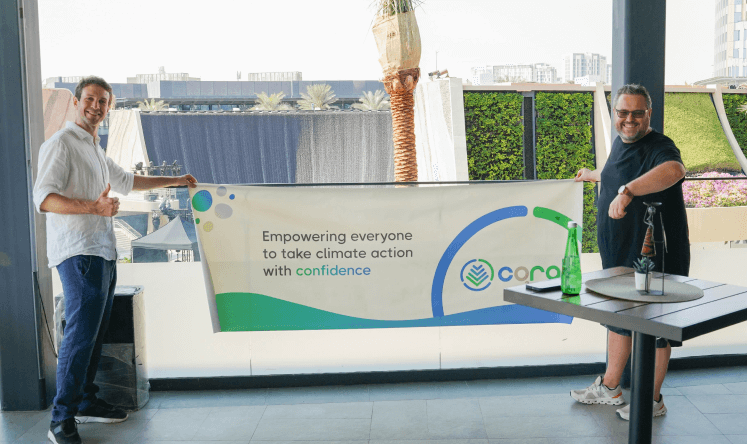
While COP28 outcomes are still being analyzed, one clear takeaway is the collective ambition to raise the bar for climate action. Coral came away inspired by the renewed energy and strengthened partnerships that will continue to drive positive climate impact.
Coral left COP28 with strengthened partnerships, new clients, and an expanded network of experts. The connections made and the conversations held will accelerate our progress towards empowering businesses to meet their climate commitments.
“The world has come together to forge a pact for climate solidarity.”
We made connections and inspired new partnerships to scale our climate impact. If COP28 showed anything, it’s that tackling climate change is a collective effort, and we’re ready to continue the work. Let’s get to work!
مقالات ذات صلة
 Emissions Reporting١٥ أكتوبر ٢٠٢٦
AI Data Centres in the GCC: How to Measure Power, Water and Embodied Carbon
Every AI rack in the GCC carries four emissions sources: purchased electricity (Scope 2), backup generators and refrigerants (Scope 1), cooling water that is often desalinated, and embodied carbon in buildings and hardware (Scope 3). In our view, most operators can report electricity well, but few can report all four with evidence. As the UAE […]
 Carbon Markets & Climate Policy٨ أكتوبر ٢٠٢٦
COP31 in Antalya: What Türkiye’s Presidency Means for GCC Companies
COP31 takes place in Antalya, Türkiye, from 9 to 20 November 2026, with Türkiye holding the Presidency and Australia chairing the negotiations. It will not create binding rules for GCC companies. But the summit’s flagship electrification pledge, Türkiye’s new emissions trading system and the EU’s Carbon Border Adjustment Mechanism (CBAM) will change what Turkish and […]
 Carbon Markets & Climate Policy٢٥ سبتمبر ٢٠٢٦
Türkiye’s Carbon Market Pilot: 2026 Data Sets Your 2027 Carbon Bill
Türkiye’s Emissions Trading System (TR ETS) regulation entered into force on 27 August 2026. The Carbon Market Board’s first decision (KPK/2026/1) then set a 2026–2027 pilot for Category B and C installations in five sectors: electricity generation, cement, iron and steel, aluminium and fertilisers. 2026 is a reporting-only year, and carbon pricing starts in 2027. […]